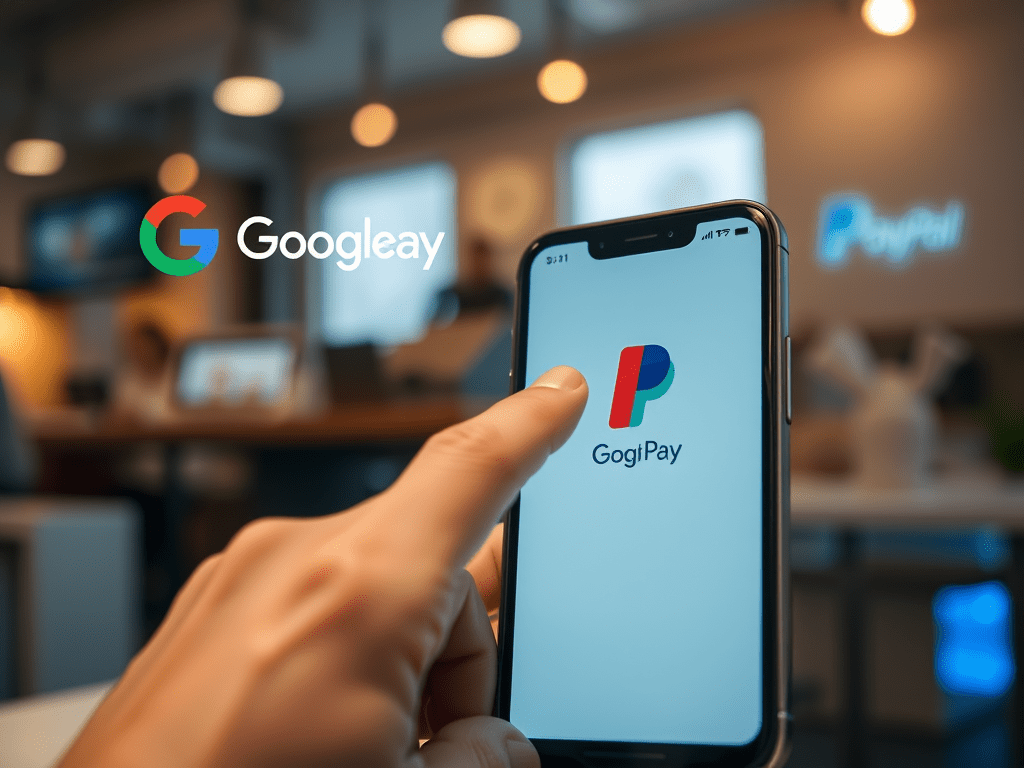
Over the past decade, mobile payment systems have transformed from convenience tools into full-blown financial platforms — so much so that services like Google Pay and PayPal can now function in many ways like a bank account. What once was a way to send money or tap your phone at a checkout has quickly evolved into a way to store, manage, send, and spend money digitally without relying exclusively on a traditional bank.
This guide explains what these services are, how they work, what they can and can’t replace in a traditional banking relationship, and how you can use them safely and effectively.
1. What Is a Digital Wallet Anyway?
A digital wallet is essentially a software-based payment system that securely stores users’ payment information electronically. It can hold credit/debit cards, bank account links, peer-to-peer transfer capabilities, and in some cases even digital IDs and loyalty cards.
Digital wallets let you:
- Pay at stores using your phone instead of a physical card
- Send money to friends and family instantly
- Store digital boarding passes, tickets, and IDs (in some regions)
- Track spending and sometimes even manage loyalty points
The idea is simple: instead of carrying cards or cash, you carry your phone, and it becomes the hub of your financial life.
2. How Google Pay Works — A Bank in Your Pocket
Google Pay is the integrated mobile payments platform developed by Google that lets users make contactless, in-store payments, online purchases, and send/receive money.
Key Features
✔ Contactless payments: Use your smartphone (or watch) to tap and pay at retail terminals without a physical card.
✔ Send & receive money: Send funds to friends using just their email or phone number.
✔ Card & account linking: Link multiple bank accounts, debit cards, and credit cards.
✔ Security: Payments are authenticated via PIN, fingerprint, or facial recognition.
In many ways, this combines the functions of a traditional bank card with the convenience of mobile tech — and that’s why people say it could replace a bank account for daily use.
A Financial Hub, Not a Bank
While Google Pay lets you manage and use your money like a bank — it’s important to understand:
👉 Google doesn’t technically operate a bank account for you. What it does is connect your existing accounts and cards and let you use them digitally. Traditional banking functions like lending, interest-bearing accounts, and regulated deposit protection still come from the bank partners behind the scenes. (SBS | Banking & Financing Platforms)
So Google Pay is a bridge between your money and your life — a powerful one — but it is not yet a full replacement for all bank services.
3. PayPal: The Original Digital Financial Platform
Before phones became wallets, PayPal pioneered online payments. It let people send money digitally and shop on the internet without sharing bank account information with every merchant.
PayPal lets its users:
- Maintain a balance within the PayPal system
- Send and receive money globally
- Make payments with linked cards or bank accounts
- Use options like PayPal Credit or merchant financing
In many regions, PayPal also offers debit cards and financial services similar to a checking account, though these are still tied to traditional financial infrastructure.
However, recent changes have impacted how PayPal interacts within digital wallets. For example, Google Wallet (the successor to Google Pay in many markets) recently stopped supporting linking PayPal accounts in the U.S., meaning you can no longer automatically pay with PayPal inside Google’s wallet ecosystem.
4. Digital Wallets vs. Traditional Bank Accounts
Where Digital Wallets Shine
📌 Convenience & Speed
Payments are often instantaneous — whether you’re paying in stores or sending money to a friend.
📌 Security Layers
Biometric authentication (fingerprint, face ID) and tokenization (virtual card numbers) add protection. (Wikipedia)
📌 Low or No Fees
Many transfers between friends or contactless payments are free, especially P2P transactions. (Grokipedia)
📌 Integration With Everyday Life
Apps can integrate offers, spending insights, loyalty, and more — often more intuitively than traditional banks.
Where Banks Still Matter
🔹 Deposit Protection & Regulation
Traditional bank accounts are insured (e.g., FDIC or equivalent) against loss; digital wallets are not necessarily insured in the same way.
🔹 Lending & Credit Products
Banks offer loans, mortgages, and credit products that wallets do not inherently provide.
🔹 Interest & Savings Growth
Banks can offer interest-bearing savings accounts. Wallets typically do not.
So while a wallet app can replace a bank account for everyday transactions, it doesn’t fully replace a bank’s broader financial ecosystem.
5. Step-by-Step: Using Google Pay as Your Primary Spending Tool
Whether you want to use Google Pay regularly or minimize dependence on a traditional bank card, here’s how to get started:
Step 1: Set Up Your Wallet
- Install Google Wallet (or Google Pay where Wallet isn’t available).
- Sign in with your Google Account.
- Add payment methods — link debit cards, credit cards, or bank accounts. (Wikipedia)
👉 In some markets, Google Wallet can now hold bank account numbers and cards, acting as a central hub for your funds. (Wikipedia)
Step 2: Secure Your Device
- Enable a PIN or biometric lock
- Turn on two-factor authentication for your Google account
Security is essential since your wallet now holds real-world money.
Step 3: Make Payments
✔ In-Store: Tap your phone to a contactless reader
✔ Online: Select Google Pay at checkout
✔ P2P: Send money via phone number or email
These tasks now replace the need to reach for a physical bank card.
6. Prospects & What’s Next
The trend toward digital wallets taking over more financial functions continues to accelerate globally. Mobile wallets already dominate e-commerce and contactless payments in many regions, and the boundaries between wallets and banks are blurring. (Clover Blog)
However, regulators are also paying attention, because as wallets get more banking-like, consumer protection, data privacy, and competition issues become priorities.
That means more rules may emerge that shape how wallets operate — but it also means safety and transparency for users.
7. Safety First: Using Wallets Responsibly
✔ Keep your device updated to protect against malware and vulnerabilities.
✔ Monitor account activity regularly for unauthorized transactions.
✔ Enable multiple layers of authentication.
Remember that even though digital wallets are convenient, they are still connected to your financial life — and keeping that secure is essential.
Conclusion
Google Pay, alongside services like PayPal, has evolved from simple payment tools into financially capable platforms that many people can use for everyday spending and money transfers — almost like having a bank in your pocket. (Wikipedia)
While they may not fully replace the entire range of services a bank provides, digital wallets are already replacing banks for many people’s daily money needs — especially when convenience, speed, and simplicity are priorities.
Whether you use these tools alongside your bank account or as your main way of managing money, understanding how they work and how to use them safely empowers you to take control of your financial life in the digital age.
If you want an illustrated PDF version of this guide, or a comparison chart of digital wallets vs. bank accounts, just let me know!
 Estrategias efectivas para tu negocio.
Deja un comentario