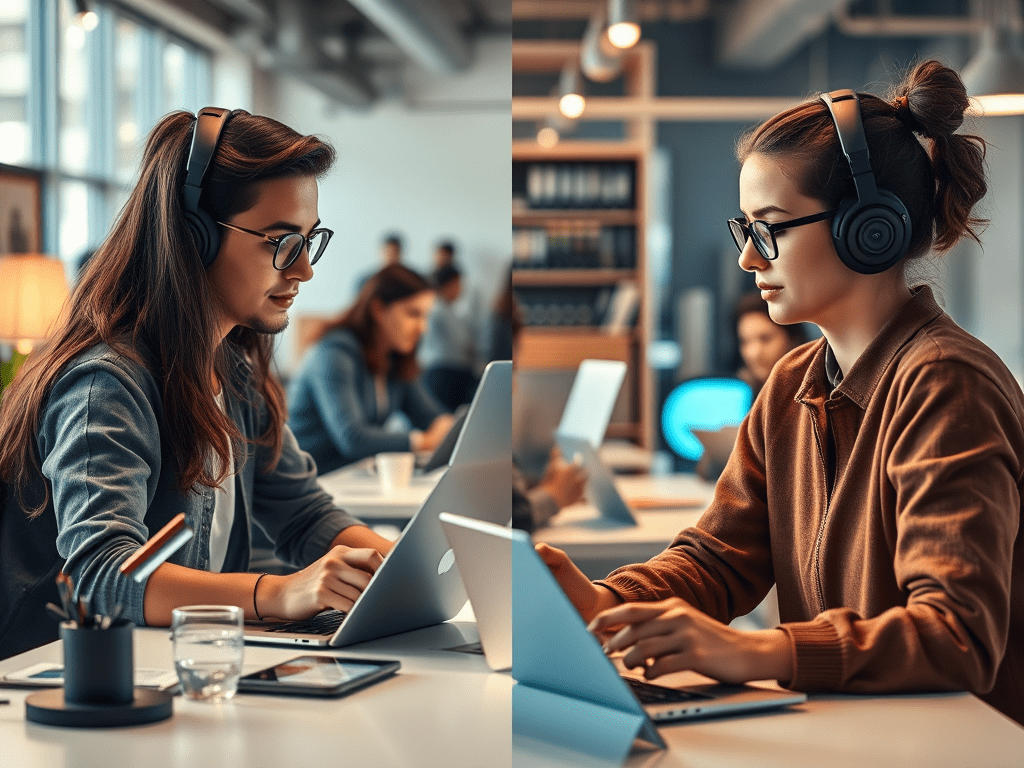
In recent years, the face of the workforce has undergone a dramatic shift. Millennials — individuals born roughly between 1981 and 1996 — have now become the largest peer group in the United States workforce, making up around 35% of all employed individuals. Their arrival has not just filled job vacancies; it has transformed the culture, priorities, and processes of countless organizations.
As highlighted in Fujitsu’s Workplace 2025 white paper, Millennials brought with them new expectations: flexible work arrangements, technological integration, social responsibility, and opportunities for personal growth. These preferences have influenced not only how work gets done, but also why people choose to work for certain companies in the first place.
The Millennial Impact: How They Changed the Game
Millennials grew up during the digital revolution and are often described as tech-savvy, independent, highly educated, and socially conscious. Their arrival in the workplace prompted employers to:
- Adopt new technologies faster – Collaboration tools like Slack, Zoom, and Trello became commonplace to support real-time communication and remote work.
- Prioritize work-life balance – Flexible schedules, remote work options, and wellness programs became key recruiting tools.
- Focus on corporate social responsibility (CSR) – Companies have had to demonstrate their commitment to environmental sustainability, diversity, and social justice to attract and retain Millennial talent.
- Offer career development opportunities – Continuous learning platforms, mentorship programs, and cross-functional projects became essential.
Example:
Google’s workplace culture — with its open offices, flexible work hours, and emphasis on continuous innovation — aligns closely with Millennial values. As a result, it has consistently ranked among the top companies for Millennial employees.
Enter Generation Z: The Next Wave of Change
Now, just as organizations have adapted to Millennials, a new cohort is stepping into the professional world: Generation Z — those born after 1996. They are digital natives in the truest sense, having grown up with smartphones, social media, and instant access to information.
While Gen Z shares some similarities with Millennials (like valuing flexibility and tech integration), they also bring unique traits that organizations must understand:
- Financial pragmatism – Growing up during the aftermath of the 2008 financial crisis, Gen Z tends to be more cautious with money and values job stability.
- Desire for entrepreneurial opportunities – Many want side hustles or the ability to innovate within their roles.
- Preference for clear boundaries – Unlike Millennials, who often blurred the line between work and life, Gen Z is more likely to set limits to protect mental health.
- Inclusivity and diversity as a baseline – They expect workplaces to be inherently inclusive, not just as a policy but as a lived reality.
Example:
Companies like TikTok (Bytedance) have attracted Gen Z talent by offering rapid career progression opportunities, modern tech tools, and a culture of creativity and openness.
Comparing Millennials and Generation Z in the Workplace
| Aspect | Millennials (1981–1996) | Generation Z (1997–2012) |
|---|---|---|
| Tech adoption | Adapted to digital tools in early adulthood | Born into a fully digital world |
| Work-life balance | Seek flexibility, may blend work and personal time | Value flexibility but maintain strict boundaries |
| Financial priorities | Value experiences, may take on debt for growth | More risk-averse, prioritize savings and stability |
| Learning style | Value mentorship and collaborative learning | Prefer self-directed, tech-based microlearning |
| Social values | Strong focus on CSR and social causes | Expect diversity and inclusion as a given |
| Communication style | Comfortable with email and video calls | Prefer instant messaging, short-form communication |
| Career goals | Growth, purpose, and varied experiences | Security, innovation, and personal brand building |
The Productivity Challenge in Modern Workspaces
While adapting to generational changes, companies also face a more universal problem: physical inactivity in the workplace. In traditional office environments, many employees spend the majority of their day seated — often in front of a screen. Although some have meetings or tasks that require movement, a significant portion remain stationary for hours at a time.
This inactivity is more than just a health risk; it is closely tied to lower productivity levels. Multiple studies have shown that movement boosts blood flow, energy, and cognitive performance — all of which are essential for high-quality work.
A Practical Innovation: Standing Desks
Jamie Fertsch, Director and co-founder of NookDesk, recognized this challenge and developed a practical solution: a standing desk designed for quick transitions between sitting and standing. With the ability to switch heights in seconds, employees can integrate movement seamlessly into their workflow.
Standing desks not only improve posture and reduce physical strain, but they can also help maintain focus, reduce fatigue, and increase energy levels throughout the day.
Example:
At a mid-sized marketing agency in New York, implementing adjustable standing desks for all employees resulted in a 15% increase in reported productivity and a reduction in midday fatigue within three months.
Expert Advice for Building a Productive Workspace
Jamie Fertsch emphasizes that small, intentional changes can make a significant difference. Her recommendations include:
- Encourage mobility – Allow for short walking breaks, standing meetings, or active brainstorming sessions.
- Prioritize ergonomics – Ensure chairs, desks, and screens are adjusted to prevent strain.
- Foster a positive atmosphere – Natural light, plants, and comfortable temperatures can enhance focus and mood.
- Promote mindful work habits – Encourage single-tasking over multitasking to improve concentration.
- Leverage technology wisely – Use productivity tools to streamline workflows but avoid notification overload.
Integrating Generational Insights with Workspace Design
Adapting to Millennials and Gen Z isn’t just about changing management styles — it’s about reimagining the physical and digital workplace to match their values and work habits.
- Millennials might appreciate collaborative spaces and wellness initiatives.
- Gen Z may prioritize technology-driven flexibility, mental health resources, and work environments that reflect their personal identity.
A forward-thinking company will blend both approaches, creating spaces that are flexible, inclusive, and designed to support both productivity and well-being.
Summary Table
| Topic | Key Insight | Example |
|---|---|---|
| Millennial workforce | Largest group (35% of US workforce), reshaped work culture | Google’s flexible, collaborative culture |
| Gen Z workforce | Financially cautious, tech-native, boundary-conscious | TikTok’s creative and fast-paced workplace |
| Tech adoption | Millennials adapted; Gen Z born into it | Slack & Zoom vs. TikTok & Discord use |
| Work-life approach | Millennials blend; Gen Z separates | Flexible hours vs. protected personal time |
| Productivity challenge | Sedentary office habits reduce output | Long desk hours lead to lower energy |
| Solution: Standing desks | Encourages movement, boosts focus and energy | NookDesk adjustable desk |
| Expert advice | Small changes improve productivity | Standing meetings, ergonomic setups, mindful work |
 Estrategias efectivas para tu negocio.
Deja un comentario