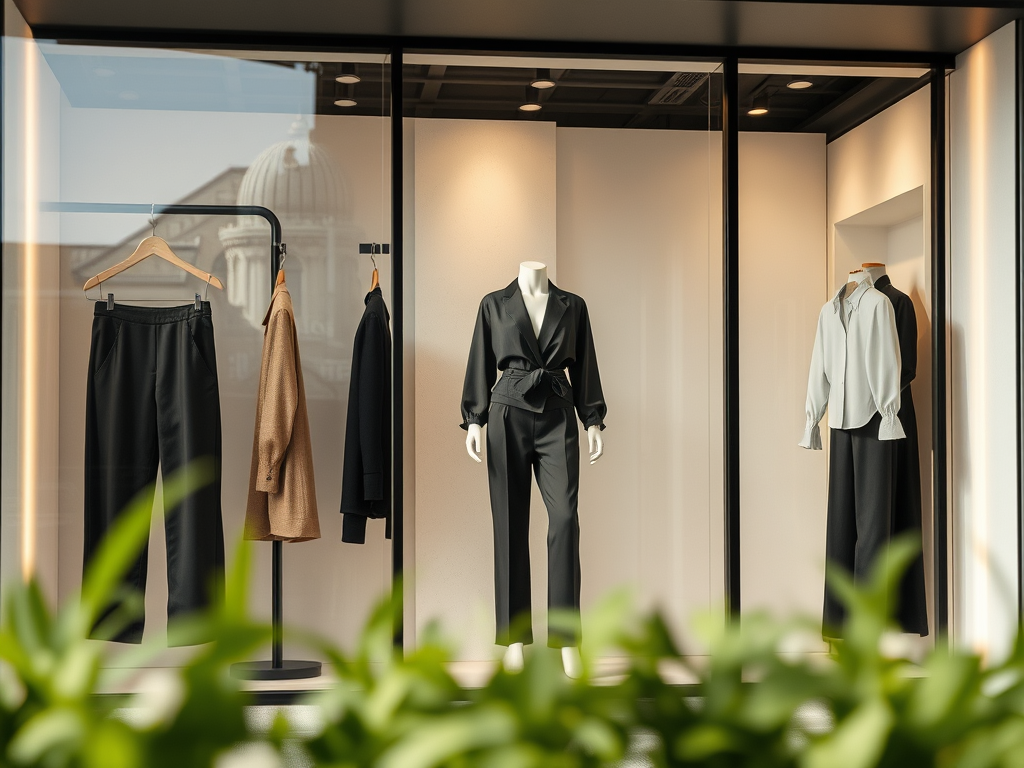
Aday is a small but ambitious startup founded by Meg He and Nina Faulhaber, who share a vision: “As entrepreneurs designing for the future, we have to think about what kind of world we want to live in,” says Faulhaber. “At our core, we believe that it needs to be the healthiest planet possible, and a sustainable future where we can all live in sync with nature.” (Fast Company)
Though just a few years into their journey, Aday’s ethos is clear: create clothing that’s not only beautiful and functional but also ecologically responsible. Their mission is to make you wear less—but better.
Technical Elegance Meets Everyday Functionality
Their lineup exemplifies the concept of “future clothing.” Picture garments that could belong in a sci-fi flick. Aday’s pieces are sleek, urban, and technologically advanced—yet utterly wearable.
Throw and Roll pants, one of their best-sellers, are crafted from moisture-wicking fabric with sculpting properties. They’ve been worn in events that range from marathons to diplomatic meetings. (Fast Company)
Their blouses fall like silk, resist wrinkling, and are machine-washable—delivering both elegance and ease. Sweaters feature thermo-regulating materials so you remain neither too hot nor too cold throughout your day. (Fast Company)
These features illustrate a key point: high performance doesn’t sacrifice style.
A Broader Context: Why It Matters
With the global apparel industry ranking among the planet’s top polluters—second only to petroleum—Aday’s approach tackles some serious issues. From pesticides on cotton farms to plastic polyesters, toxic dyes, and energy-intensive factories, every garment leaves a hidden environmental footprint. And many are worn just a handful of times before discard.
Aday counters this with pieces designed for longevity, multi-season wear, and minimalist wardrobes—asking wearers to shop less but shop smart. (Fast Company)
Design Thinking from Tech to Textiles
Neither Meg nor Nina came from fashion backgrounds—they met as analysts at Goldman Sachs in London and later worked in venture capital. But they brought a fresh mindset to clothing design: blending fashion, sportswear, Silicon Valley-style design thinking, and minimalist principles inspired by Dieter Rams. (Goldman Sachs, Marie Claire, Equinox)
Their creative process starts with observation—what do women need in their wardrobes? How can one garment perform multiple roles? The result: technical fabrics, minimalist silhouettes, and versatility intertwined with aesthetics and ease. (Goldman Sachs, Appear Here, Rolling Stone Culture Council)
Customer-Centric and Iterative
Aday doesn’t just design in a vacuum—they deeply involve their customers.
Take the Carry-On Capsule, a five-piece collection designed based on direct survey feedback. “We asked them, ‘What do you want to see from us next?’… the dress we ended up designing was probably the most successful dress we could have designed.” (Marie Claire)
Another example: the Something Borrowed Shirt evolved through over 15 iterations thanks to consumer feedback, with adjustments to slits, buttons, and even fabric (including recycled options) over time. (Forbes)
Sustainability & Supply Chain Innovation
Aday is committed to sustainability at every stage:
- They’re harnessing solar power, recycled plastics, and forward-looking technical fabrics to reduce environmental impact.
- Their Plant Bae collection is a notable breakthrough: 90% plant-based fabric combining cellulose from beech trees and Icelandic seaweed fibers, providing a soft and sustainable option.
- As of 2024, 74% of their materials are either natural, recycled, biodegradable, or regenerated. (Aday)
- A sustainable goal: 85% of materials to be sustainable by 2024. While there’s limited data on progress, they are transparent with sourcing and supply chain practices.
- Environmental management: 46% of their mills and 40% of factories use at least 30% renewable energy. Customers are also offered carbon offsetting at checkout via a partnership.
- Social responsibility: They ensure living wages, transparency in supplier facilities, and flexible working conditions.
- Over 70% of fabrics are regenerative or recycled; 82% of mills feature water-recycling/purification systems.
Growth, Recognition & Business Strategy
Aday launched in 2015 in London and moved headquarters to Soho, NYC, when most of their customers proved to be in the U.S.
In 2020, they raised $8.5 million in Series A funding (bringing their total to $10.5M), with backing from Downing Ventures and H&M Co:Lab. The funding affirmed Aday’s model of fewer, high-quality basics. (Forbes)
Their minimalist, capsule approach attracted strong loyalty and profitability by mid-2019, despite a challenging fashion environment.
Putting It All Together: A Comparison Table
| Aspect | Fast Fashion Standard | Aday’s Approach |
|---|---|---|
| Fabric Quality | Cheap, low-durability blends | Technical, high-performance fabrics (moisture-wicking, thermo-regulating, plant-based) |
| Sustainability | Often poor—pesticides, disposables | Recycled, biodegradable materials; solar, water recycling, offsets, supply transparency |
| Design Philosophy | Seasonal, trend-driven | Seasonless, minimalist, multi-purpose pieces |
| Product Lifecycle | Worn few times, then discarded | Durable staples worn repeatedly across seasons |
| Customer Feedback | Often ignored | Engaged via surveys; iterative design (e.g., Something Borrowed Shirt) |
| Business Model | Volume-driven, low margin | Capsule, high-quality pieces with strong loyalty and mindful consumption |
Final Thoughts
Aday isn’t just selling clothes—it’s reimagining how we approach our wardrobes and our planet. By blending technical innovation, design elegance, circular thinking, and customer-led evolution, they’re carving a niche in the sustainable fashion movement.
Their philosophy of “style creates confidence… style is a sustainable choice” captures the essence: when clothes are intended to be loved and worn again, they become both personal and planetary gifts.
Deja un comentario