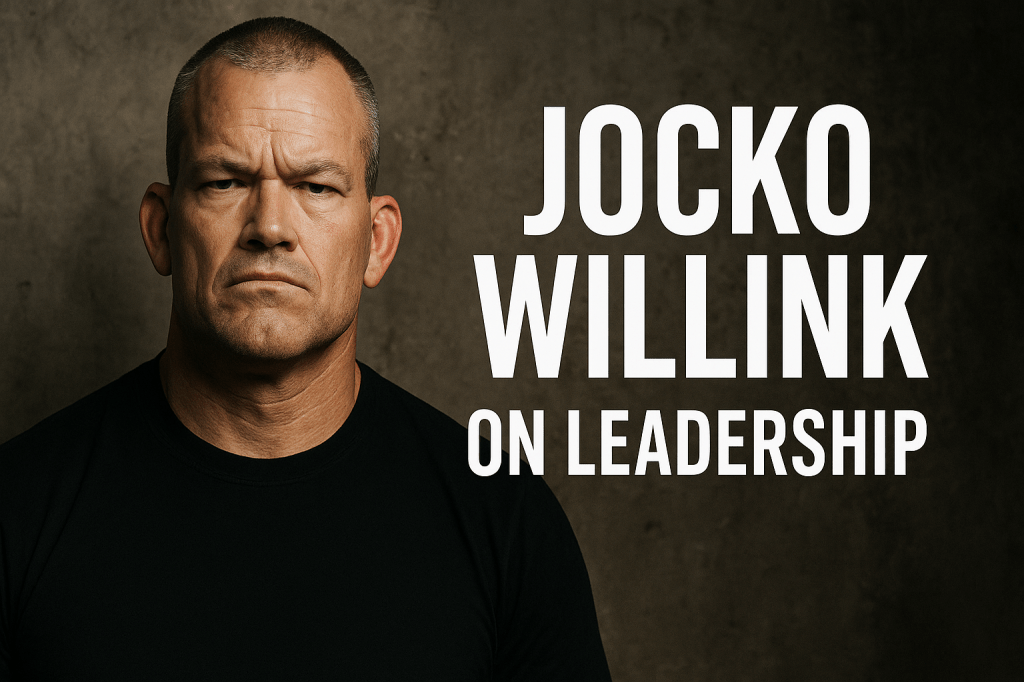
When you hear the name Jocko Willink, most people think of one thing: a tough-as-nails Navy SEAL commander who thrived in the most intense and dangerous environments on earth. What many don’t realize is how deeply his military experiences have shaped his view of leadership — and why his approach is less about shouting orders and more about responsibility, respect, and trust.
The Battle That Shaped a Leader
During his time as the commander of SEAL Team 3’s Task Unit Bruiser in Ramadi, Iraq, Willink led dozens of missions in one of the most violent and complex urban combat zones of the Iraq War.
In one operation, his team faced an enemy that was entrenched in a heavily fortified neighborhood. The pressure was immense — one wrong move could cost lives. Yet, despite the chaos, Willink’s leadership was calm, calculated, and clear.
Why? Because yelling orders or intimidating the team wouldn’t win this fight. The SEALs had to trust one another, take initiative, and adapt on the fly. This mission didn’t just require discipline — it demanded extreme ownership, where every team member understood the mission, their role, and their responsibility to the group’s success and survival.
The Myth of the “Yelling Drill Sergeant”
After retiring, Willink co-founded Echelon Front with fellow SEAL Leif Babin to bring these battlefield leadership principles to the civilian world. But early on, Willink encountered a surprising misconception.
“Some clients expected me to come in and ‘whip their people into shape,’” Willink said in a Business Insider interview.
He had to be clear:
“If you want someone to whip your people into shape, you should hire someone else, because I’m not going to whip anyone into shape. If you want people to do things, you don’t whip them. You end up with a beaten dog — and a beaten dog is useless. Or you’ll get a rebellion.”
In the military, as in business, leadership through fear and intimidation is counterproductive. It might work momentarily, but it destroys trust and morale.
The Beaten Dog and the Rebellion
Imagine a team where the leader yells constantly, criticizes harshly, and threatens punishment at every misstep. The team members become afraid to speak up or take initiative, working only to avoid punishment rather than to achieve success. That’s the “beaten dog” — compliant but broken.
Worse still, when people feel oppressed, they might eventually resist outright — the rebellion.
Willink witnessed this in missions where poor leadership nearly cost lives. When trust breaks down, communication fails. The team stops working as one, and the mission falters.
Extreme Ownership: The Foundation of Leadership
What does work? Willink’s answer is Extreme Ownership — the mindset that leaders are responsible for everything their team does or fails to do.
Take, for example, a mission where his team was ambushed due to faulty intelligence. Instead of blaming the intel officers or the soldiers who didn’t anticipate the attack, Willink took responsibility as the commander.
This mindset changes the whole dynamic of leadership. Instead of pointing fingers, leaders ask:
- How can I improve the plan?
- How can I better prepare the team?
- How can I communicate more clearly?
This approach creates a culture of accountability and trust.
Empowerment Over Micromanagement
Willink also stresses empowering team members to make decisions within their areas of expertise. During operations, SEALs often have to think and act independently. Micromanaging in that context is deadly.
He translates this into business by encouraging leaders to:
- Clearly communicate the mission and goals.
- Define boundaries and expectations.
- Trust team members to make decisions and learn from mistakes.
Respect, Not Fear
Willink’s leadership philosophy emphasizes respect earned through competence and fairness, not fear.
On one deployment, he remembers a fellow SEAL leader who earned loyalty not by yelling, but by showing genuine care for his team’s welfare — listening to concerns, acknowledging their efforts, and sharing the risks equally.
That kind of respect motivates far more than fear ever could.
From the Battlefield to Your Business
Whether you’re leading a startup or managing a large corporation, these principles hold true:
- Take responsibility.
- Communicate clearly.
- Empower your team.
- Earn respect.
Yelling, intimidation, and fear only lead to short-term compliance, broken morale, and high turnover.
The Practical Takeaway
Leadership is about inspiring performance, not demanding it through intimidation. Willink’s experiences show that the most effective leaders lead by example, take responsibility, and empower their teams.
In his words:
“Discipline equals freedom.”
When leaders create disciplined, accountable teams, those teams become freer, more agile, and more effective — whether on the battlefield or in business.
Leadership Philosophy Summary Table
| Principle | Description | Example in Practice |
|---|---|---|
| Extreme Ownership | Leaders accept full responsibility for everything their team does or fails to do. | After a failed project, a manager analyzes their own communication to improve future clarity. |
| Empowerment over Micromanagement | Trusting team members to make decisions within their roles, encouraging autonomy. | A software development lead lets developers decide on code architecture within set parameters. |
| Respect, Not Fear | Authority is earned through competence and fairness, not by intimidating or punishing. | A retail manager listens to employees’ suggestions and treats everyone fairly, earning their loyalty. |
| Clear Communication | Ensuring everyone understands goals, expectations, and roles clearly. | Before launching a campaign, the team reviews objectives, deadlines, and individual responsibilities. |
| Building Trust | Creating an environment where team members feel safe to give feedback and take risks. | A design team holds retrospectives to discuss what worked and what didn’t, without blaming individuals. |
 Estrategias efectivas para tu negocio.
Deja un comentario