Content is the driving force behind our most effective marketing strategies—demand generation, inbound, account-based marketing, and sales enablement. And as marketers aim to personalize how their prospects and target accounts experience their content, scaling the creation of those experiences becomes the next big hurdle.
But it doesn’t have to be. Like anything, a little planning and work up front will make the creation and scalability of personalized experiences for your marketing strategies and campaigns painless—and dare I say, fun!
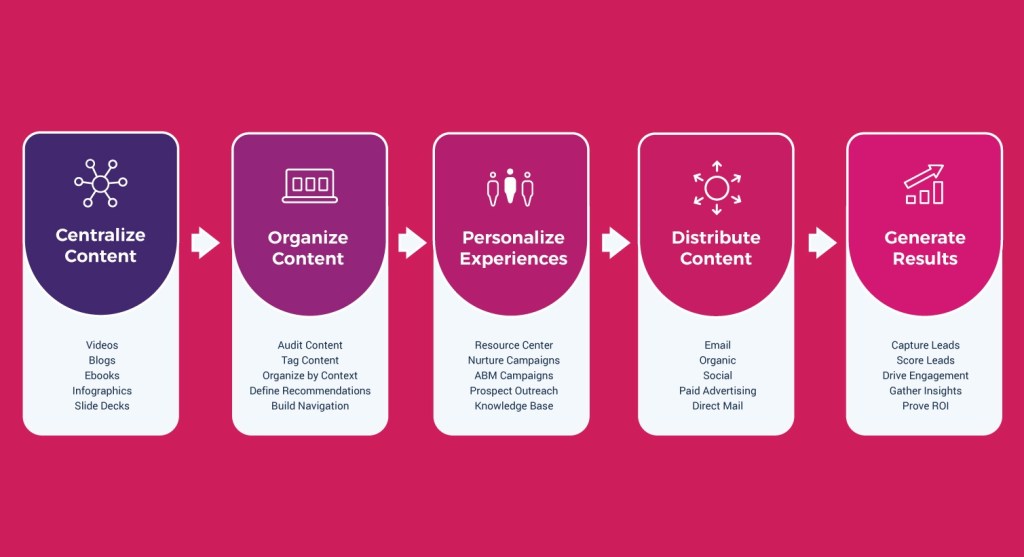
The Content Experience Framework arms marketers with a scalable approach to creating personalized content experiences for any stage of the buyer journey. The framework outlines five easy steps to help you focus, align your team, and deliver truly meaningful experiences so you can rock your inbound, ABM, demand generation, and sales enablement programs!
Whether you have a content experience platform to help you do it, or you manage it with separate tools, spreadsheets, and serious hacking skills, the concepts remain the same.
What is the Content Experience Framework and how can it help businesses
The Content Experience Framework is a tool that helps businesses create personalized content experiences to power their inbound marketing, demand generation, account-based marketing, and sales enablement. It is the overall experience of accessing, consuming, engaging with, and responding to a stream of brand content. Here are some ways the Content Experience Framework can help businesses:
- Create engaging, relevant content experiences at scale for every campaign, audience, and stage of the buyer journey.
- Centralize content and audit it, then tag it by a particular topic, persona, account, industry, or stage of the funnel so that it can be easily found, used, and shared.
- Define what content should be recommended by hand-selecting or using artificial intelligence and intent data.
- Personalize experiences by easily spinning up collections of content that are branded, binge-worthy, and personalized to your buyers’ interests or stage of the journey.
- Tailor messaging for any audience, select and recommend content, and include contextual CTAs to personalize the experience.
- Map your experiences to each stage of the buyer journey and distribute content across the channels that best complement it.
- Help your prospects by creating personalized content experiences that address their needs and pain points.
- Keep your marketing operations on track and execute your content creation and distribution more effectively.
By using the Content Experience Framework, businesses can create a documented content framework that helps them make updates as needed and is easier for teammates to reference if they have a question. This can help businesses execute their content creation and distribution more effectively, leading to better results.
Understanding the Content Experience Framework
The Content Experience Framework is a holistic strategy that shifts the traditional content-centric approach towards a more audience-centric perspective. It recognizes that content doesn’t exist in isolation; it is part of a broader experience that includes various touchpoints, channels, and interactions.
At its core, the framework comprises three key pillars:
- Content Creation: This pillar involves developing high-quality, valuable, and relevant content that addresses the needs, pain points, and interests of your target audience. It goes beyond just producing text and encompasses various formats like videos, infographics, podcasts, and interactive tools.
- Content Distribution: Once your content is ready, the next step is to strategically distribute it across multiple platforms and channels where your audience is active. This pillar emphasizes the importance of understanding your audience’s preferences and behavior to ensure that your content reaches them effectively.
- Content Engagement: Engagement is the heart of the framework. It focuses on creating immersive and interactive experiences that encourage meaningful interactions with your content. This pillar leverages various techniques such as personalization, interactive elements, storytelling, and gamification to keep your audience engaged and invested.
The Benefits of Implementing the Content Experience Framework
- Enhanced Audience Engagement: By prioritizing engagement over quantity, the framework ensures that your audience spends more time interacting with your content. This leads to increased brand loyalty, better brand recall, and a higher likelihood of conversions.
- Improved Brand Perception: A well-executed content experience demonstrates your commitment to providing value to your audience. This can enhance your brand’s reputation and position you as an authority in your industry.
- Higher Conversion Rates: Engaged and invested audiences are more likely to take desired actions, such as signing up for newsletters, downloading resources, or making purchases.
- Better Data Insights: The framework encourages tracking and analyzing audience interactions at various touchpoints. This data-driven approach provides valuable insights that can guide future content creation and distribution strategies.
- Long-term Relationships: Fostering meaningful interactions with your audience lays the foundation for long-term relationships, turning one-time visitors into loyal advocates.
Implementing the Framework: Practical Steps
- Audience Research: Understand your audience’s preferences, behaviors, and pain points to tailor your content effectively.
- Content Strategy: Develop a cohesive content plan that aligns with your audience’s needs and journey.
- Multi-channel Distribution: Identify and utilize the most suitable platforms to reach your audience, whether it’s social media, your website, email newsletters, or other channels.
- Interactive Elements: Incorporate interactive elements such as quizzes, polls, and calculators to engage your audience.
- Personalization: Deliver personalized content recommendations based on user behavior and preferences.
- Feedback and Iteration: Continuously analyze engagement metrics, gather feedback, and refine your content experience strategy.
In a digital landscape where attention spans are short and competition is fierce, the Content Experience Framework offers a strategic approach to cut through the noise and create meaningful connections with your audience. By focusing on content creation, distribution, and engagement in equal measure, businesses can create impactful experiences that drive engagement, foster loyalty, and ultimately achieve their marketing goals.
Example of business the implement effectively the Content Experience Framework
Here are a few examples of businesses that have effectively implemented the Content Experience Framework to enhance their engagement and impact:
- Red Bull:
Red Bull is a prime example of a brand that has mastered the art of content experience. Beyond traditional energy drink advertising, Red Bull creates and shares captivating content around extreme sports, music, and culture. Their online magazine, Red Bull Content Pool, features articles, videos, and images that resonate with their target audience’s interests. By seamlessly integrating their products into engaging and shareable content, Red Bull has built a strong community and brand loyalty. - HubSpot:
HubSpot, a leading inbound marketing and sales platform, focuses on providing valuable educational content to its audience. They offer a wealth of resources, including blog posts, ebooks, webinars, and tools. HubSpot’s content is not only informative but also well-designed and easy to navigate. Their content is distributed across various channels and tailored to different stages of the buyer’s journey, making it a prime example of a strategic content experience. - Nike:
Nike has successfully integrated the Content Experience Framework into its marketing strategy. Through interactive apps, personalized training plans, and immersive videos, Nike creates an experience that goes beyond selling products. Their content is designed to inspire and motivate their audience to embrace an active lifestyle. Nike’s content experience extends to their mobile apps, social media campaigns, and brick-and-mortar stores, creating a cohesive and engaging brand experience. - Salesforce:
Salesforce, a cloud-based customer relationship management (CRM) platform, excels at delivering valuable content to educate and empower its user base. They offer a mix of articles, videos, webinars, and guides that help users make the most of their software. Salesforce’s Trailhead platform takes learning to a new level by offering interactive and gamified tutorials. Their content experience not only helps users but also positions Salesforce as a thought leader in the CRM industry. - Etsy:
Etsy, an online marketplace for handmade and unique products, uses its content to connect buyers and sellers on a deeper level. They curate compelling stories about artisans and their crafts, weaving a narrative that resonates with their audience’s appreciation for handmade items. Through blogs, videos, and social media, Etsy creates an emotional connection between buyers and the creators behind the products, enhancing the overall shopping experience. - Optimizely: Optimizely uses its own technology and data-driven insights to tell captivating stories.
- DocuSign: DocuSign does a great job of creating content that is informative and engaging.
- Wistia: Wistia has a video library that is both entertaining and educational.
- National Association of Realtors’ House Logic: House Logic provides valuable information to homeowners and homebuyers.
- Acorns’ financial site Grow: Grow provides financial advice and education to its users.
- Blackboard Blog on Education: Blackboard Blog provides insights and resources for educators.
- Uberflip: Uberflip itself is an example of a business that has successfully implemented the Content Experience Framework.
- Prophet: Prophet helps guide holistic content experiences that drive the next best action.
These businesses have successfully used the Content Experience Framework to create engaging, relevant content experiences at scale for every campaign, audience, and stage of the buyer journey2. By centralizing content, auditing it, and tagging it by a particular topic, persona, account, industry, or stage of the funnel, these businesses have made it easy for their content to be found, used, and shared. They have also personalized experiences by tailoring messaging for any audience, selecting and recommending content, and including contextual CTAs to personalize the experience.
How implement effectively The Content Experience Framework in B2B context
Implementing the Content Experience Framework effectively in a B2B context requires a strategic and tailored approach. Here’s a step-by-step guide on how to do it:
- Understand Your Audience: Just as in B2C, understanding your B2B audience is crucial. Identify their pain points, challenges, and needs at different stages of the buyer’s journey. This will guide your content creation and distribution strategy.
- Content Strategy and Planning:
- Develop a comprehensive content plan that aligns with your audience’s needs and journey.
- Create a variety of content formats such as blog posts, whitepapers, case studies, webinars, videos, and infographics.
- Focus on addressing industry-specific challenges and providing practical solutions.
- Distribution Strategy:
- Identify the most relevant platforms and channels for your B2B audience. This could include LinkedIn, industry forums, webinars, and email newsletters.
- Tailor your content to fit each platform while maintaining a consistent brand voice and message.
- Consider partnering with industry influencers or thought leaders to expand your reach.
- Interactive and Engaging Content:
- Incorporate interactive elements like calculators, ROI calculators, self-assessment tools, and quizzes.
- Develop webinars or virtual events that allow your audience to engage directly with your experts.
- Use storytelling techniques to make complex B2B concepts relatable and memorable.
- Personalization:
- Leverage data and analytics to personalize content recommendations and offerings based on user behavior and preferences.
- Use dynamic content that adapts based on the user’s role, industry, and specific interests.
- Consistency and Branding:
- Maintain a consistent brand identity across all content touchpoints.
- Create a content style guide to ensure uniformity in tone, voice, and design.
- Measurement and Analytics:
- Implement robust tracking and analytics to measure the effectiveness of your content across different stages of the buyer’s journey.
- Analyze metrics like engagement rates, conversion rates, and lead generation to refine your strategy.
- Nurture and Follow-up:
- Develop a lead nurturing strategy that delivers relevant content to prospects as they progress through the funnel.
- Use marketing automation to send targeted content based on user interactions and behaviors.
- Feedback and Iteration:
- Encourage feedback from your B2B audience and adapt your content strategy based on their input.
- Regularly review and update your content to ensure it remains relevant and valuable.
- Collaboration with Sales:
- Align your content strategy with your sales team’s goals and needs.
- Provide sales teams with content that addresses common objections and helps them nurture leads effectively.
- Thought Leadership:
- Position your brand as a thought leader by creating in-depth industry analyses, research reports, and insights.
- Share your expertise through webinars, speaking engagements, and guest contributions on industry platforms.
- Continuous Learning:
- Stay updated on industry trends and shifts to ensure your content remains relevant and timely.
By implementing the Content Experience Framework in a B2B context, you can create a cohesive and engaging experience that resonates with your target audience, establishes your brand as a trusted authority, and ultimately drives conversions and business growth.
🚀 Revolutionizing Sales Enablement with the Content Experience Framework: A Success Story 🚀
At XYZ Corp, we were faced with a common challenge: aligning our sales and marketing efforts to maximize revenue growth. Our content was scattered across various platforms, lacking consistency and failing to engage prospects effectively. That’s when we turned to the Content Experience Framework, and the results were nothing short of remarkable.
The Challenge:
Our sales team struggled to access relevant and up-to-date content, causing delays in responding to prospect inquiries and hindering their ability to close deals. Our marketing team, on the other hand, poured significant efforts into creating high-quality content, but it often got lost in the shuffle, failing to make the desired impact.
The Solution:
Enter the Content Experience Framework—a strategic approach that emphasizes creating, optimizing, and delivering content to enhance buyer engagement and drive revenue. We implemented this framework with a focus on three key pillars:
- Centralized Content Hub: We established a unified platform that hosted all our content assets, from blog posts and whitepapers to videos and case studies. This centralized hub ensured easy access for both sales and marketing teams, eliminating content silos and streamlining collaboration.
- Personalized Content Experiences: Leveraging the framework, we tailored content journeys based on buyer personas and their stages in the sales funnel. This personalization increased engagement, as prospects received content relevant to their pain points and interests.
- Data-Driven Insights: By utilizing analytics and tracking tools within the framework, we gained deep insights into content performance. This allowed us to refine our content strategy, focusing on assets that resonated most with our audience and optimizing our sales enablement efforts.
The Results:
The impact of implementing the Content Experience Framework was transformative:
- Increased Sales Efficiency: With quick access to relevant content, our sales team could respond faster to prospect queries, providing them with the information they needed at the right time. This led to shorter sales cycles and improved win rates.
- Enhanced Prospect Engagement: The personalized content experiences significantly boosted prospect engagement, leading to higher click-through rates and more meaningful interactions.
- Revenue Growth: The alignment between sales and marketing, powered by the framework, resulted in a substantial increase in revenue. Our efforts were now targeted, efficient, and focused on delivering value to our prospects.
- Content Optimization: Data-driven insights allowed us to optimize our content strategy continuously. We identified top-performing assets, adjusted content distribution, and refined messaging to match prospect preferences.
Conclusion
the Content Experience Framework revolutionized our sales enablement efforts at XYZ Corp. It transformed our content into a strategic asset, powering personalized interactions and driving revenue growth. By centralizing our content, personalizing experiences, and leveraging data-driven insights, we achieved a synergy between sales and marketing that delivered exceptional results. If you’re looking to supercharge your sales enablement strategy, the Content Experience Framework could be your game-changing solution.
Recommended Reading:
- What Is Content Experience? Definition, Components, Framework and Examples
- What is Content Experience
- Content Experience Framework
- Understanding the B2B Content Experience Framework
- Reputation Marketing
- A Content Strategy Framework for the Evolved Enterprise
- 38+ Examples of Brands Doing Great Content
 Estrategias efectivas para tu negocio.
Deja un comentario