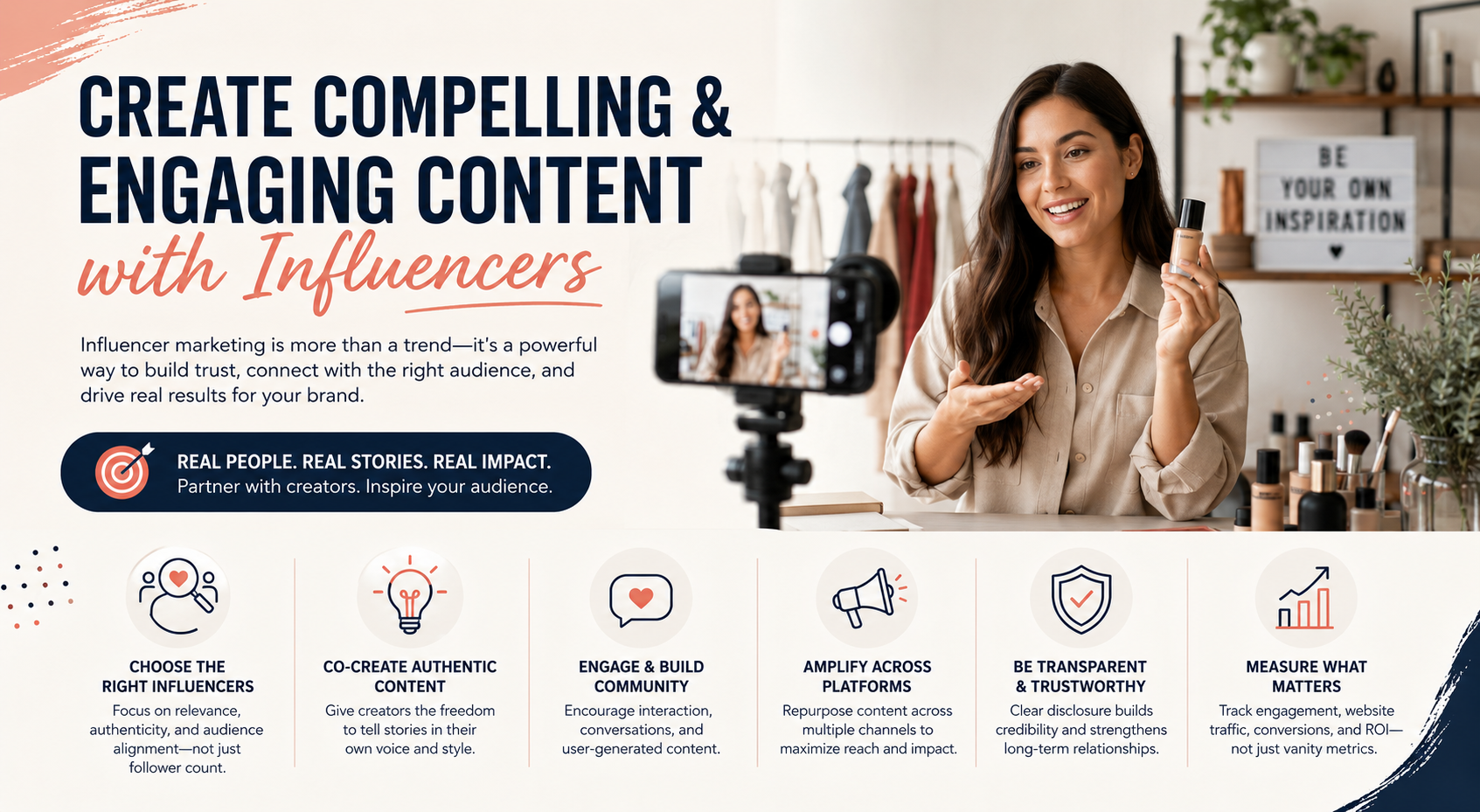
Influencer marketing has evolved far beyond simply sending free products to creators and hoping for a few social media mentions. Today, the most successful brands understand that influencer marketing is fundamentally content marketing. The real value is not just access to an audience, but the ability to co-create authentic stories that resonate, build trust, and inspire action. (Chief Marketer)
In a digital landscape saturated with advertisements, consumers increasingly trust people more than brands. Influencers have built communities around their expertise, passions, and personalities. Their followers do not merely consume content; they engage with it, comment on it, share it, and often make purchasing decisions based on it. This unique relationship makes influencer-generated content one of the most powerful marketing assets available today.
But creating successful influencer content requires much more than selecting a creator with a large following. Brands must understand storytelling, audience psychology, authenticity, platform dynamics, and long-term relationship building.
This guide explores how companies can create compelling, engaging, and effective content through influencer collaborations.
Why Influencer Content Works Better Than Traditional Advertising
Traditional advertising interrupts.
Influencer content integrates.
This distinction explains why influencer marketing has become a multi-billion-dollar industry and continues to grow rapidly. (IntechOpen)
When consumers see a television commercial, they immediately recognize it as advertising. Their defenses rise automatically.
When they see a trusted creator discussing a product within their normal content, the message feels more natural and relevant.
The difference lies in three factors:
1. Trust
Influencers spend years building relationships with their audiences.
Followers perceive them as peers rather than corporations.
Research consistently shows that authenticity and relatability increase engagement and purchase intent. (MDPI)
2. Relevance
Influencers often serve highly specific niches:
- DIY enthusiasts
- Gamers
- Parents
- Beauty lovers
- Fitness communities
- Educators
- Technology enthusiasts
This targeting allows brands to reach highly qualified audiences.
3. Storytelling
People remember stories far better than product features.
Influencers naturally embed products into narratives, experiences, and personal recommendations.
This transforms promotion into content.
The Biggest Mistake Brands Make
Many companies approach influencers as media channels rather than creative partners.
They send:
- Rigid scripts
- Long product descriptions
- Excessive brand guidelines
- Corporate messaging
The result?
Content that feels artificial.
Audiences notice immediately.
The most successful influencer campaigns provide direction without eliminating creativity.
As the original Chief Marketer article highlighted, influencers understand how to tell stories in their own voice, which is precisely why audiences follow them in the first place.
Start with the Right Objectives
Before contacting any influencer, brands must define what success looks like.
Different objectives require different content strategies.
Awareness
Goal:
Introduce the brand to new audiences.
Best formats:
- Reels
- TikToks
- Short videos
- Product introductions
Metrics:
- Reach
- Impressions
- Video views
Engagement
Goal:
Generate conversations.
Best formats:
- Challenges
- Polls
- Q&A sessions
- User-generated content campaigns
Metrics:
- Comments
- Shares
- Saves
- Participation
Consideration
Goal:
Help consumers evaluate products.
Best formats:
- Reviews
- Tutorials
- Comparisons
- Demonstrations
Metrics:
- Clicks
- Website traffic
- Time on site
Conversion
Goal:
Drive sales.
Best formats:
- Product recommendations
- Promotional offers
- Affiliate links
- Live shopping
Metrics:
- Sales
- Revenue
- ROAS
Choosing the Right Influencers
The biggest influencer is not always the best influencer.
In many cases, smaller creators outperform celebrities.
Mega Influencers
1M+ followers
Advantages:
- Massive reach
- Brand prestige
Challenges:
- Expensive
- Lower engagement rates
Macro Influencers
100K–1M followers
Advantages:
- Strong reach
- Professional content
Challenges:
- Higher costs
Micro Influencers
10K–100K followers
Advantages:
- High trust
- Better engagement
Research increasingly shows that micro-influencers often generate stronger audience relationships and more meaningful interactions. (Sage Journals)
Nano Influencers
Under 10K followers
Advantages:
- Exceptional authenticity
- Highly engaged communities
Challenges:
- Limited scale
For many brands, especially SMEs, micro and nano influencers provide the best ROI.
The Power of Storytelling
The best influencer content rarely starts with the product.
It starts with a story.
Research on influencer storytelling identifies four particularly effective approaches:
- Educating
- Evaluating
- Advising
- Entertaining (Sage Journals)
Let’s explore each.
Educational Content
Examples:
- Tutorials
- How-to videos
- Demonstrations
Why it works:
People actively seek useful information.
A DIY creator showing how to transform furniture with paint is far more engaging than simply displaying a paint can.
For brands like TColors or Fly&Flot, educational content can showcase:
- Techniques
- Creative ideas
- Classroom activities
- DIY projects
Evaluation Content
Examples:
- Reviews
- Product testing
- Comparisons
Why it works:
Consumers seek reassurance before purchasing.
Influencers help reduce uncertainty.
Advisory Content
Examples:
- Recommendations
- Buying guides
- Expert tips
Why it works:
Followers view influencers as trusted advisors.
Entertainment Content
Examples:
- Challenges
- Humor
- Experiments
- Creative transformations
Why it works:
Entertainment drives sharing.
People share content that makes them laugh, smile, or feel inspired.
Give Creators Creative Freedom
One of the strongest predictors of campaign success is allowing influencers to adapt the message to their audience.
Research highlights the importance of balancing brand alignment with creator autonomy.
Brands should provide:
Do
- Key messages
- Product benefits
- Campaign objectives
- Legal requirements
Don’t
- Word-for-word scripts
- Overly restrictive guidelines
- Excessive approvals
The creator understands their audience better than anyone.
Trust them.
Authenticity Is the Real Currency
Authenticity remains the single most important factor in influencer marketing success.
Consumers can detect forced sponsorships instantly.
The best collaborations occur when:
- Influencer values align with brand values
- Product fits naturally into content
- Recommendations feel genuine
Before partnering, ask:
«Would this creator use our product even without sponsorship?»
If the answer is no, reconsider.
Build Long-Term Relationships
One-off campaigns rarely maximize impact.
The strongest results come from ongoing collaborations.
Benefits include:
Increased Credibility
Repeated exposure creates familiarity.
Better Content
Creators become more knowledgeable about the brand.
Stronger Community Response
Followers recognize authentic relationships.
Improved ROI
Content quality improves over time.
Many of the world’s most successful influencer programs are ambassador programs rather than isolated campaigns.
Encourage User-Generated Content
The most powerful influencer campaign often inspires audiences to create content themselves.
Examples:
- Challenges
- Contests
- Hashtag campaigns
- Creative projects
Benefits:
- Increased reach
- Social proof
- Community building
The influencer starts the conversation.
The audience amplifies it.
Multi-Platform Content Strategies
Different platforms require different approaches.
Best for:
- Visual storytelling
- Reels
- Lifestyle content
TikTok
Best for:
- Entertainment
- Trends
- Viral content
YouTube
Best for:
- Reviews
- Tutorials
- Long-form storytelling
Best for:
- B2B influence
- Professional expertise
- Thought leadership
Best for:
- DIY
- Crafts
- Home decoration
- Educational inspiration
A smart strategy repurposes influencer content across multiple channels.
Transparency Builds Trust
Disclosure is no longer optional.
Modern consumers appreciate transparency.
Recent research suggests that clear sponsorship disclosure does not necessarily harm engagement and may actually strengthen credibility. (Springer Nature)
Best practices include:
- Clearly identifying sponsored content
- Using platform disclosure tools
- Maintaining honesty about partnerships
Trust lost is difficult to regain.
Measuring Success
Vanity metrics alone are insufficient.
Evaluate campaigns across three levels:
Content Performance
- Reach
- Impressions
- Views
Engagement
- Comments
- Shares
- Saves
- Interactions
Business Impact
- Leads
- Sales
- Revenue
- Customer acquisition cost
The ultimate goal is not likes.
It is business growth.
What the Future of Influencer Content Looks Like
Several trends are shaping the future:
Micro-Influencers Continue to Rise
Brands increasingly favor engagement over sheer audience size.
Authenticity Over Perfection
Highly polished content often underperforms compared with genuine, relatable storytelling. (MDPI)
Creator Economy Expansion
Influencers are becoming entrepreneurs, consultants, educators, and even co-creators of products. (Vogue)
Community-Led Marketing
The focus is shifting from followers to communities.
Brands that help creators build communities will outperform those that simply buy reach.
Final Thoughts
The secret to creating compelling and engaging content with influencers is surprisingly simple:
Stop thinking like advertisers.
Start thinking like storytellers.
Influencers are not media placements. They are creators, community builders, and trusted voices. The most successful brands understand that great influencer marketing begins with authentic relationships, meaningful stories, and content that delivers genuine value.
When brands collaborate with creators rather than control them, audiences respond. Trust grows. Engagement rises. Communities form.
And in a world where attention is increasingly scarce, authentic influence becomes one of the most valuable assets any brand can possess. (Chief Marketer)
Deja un comentario