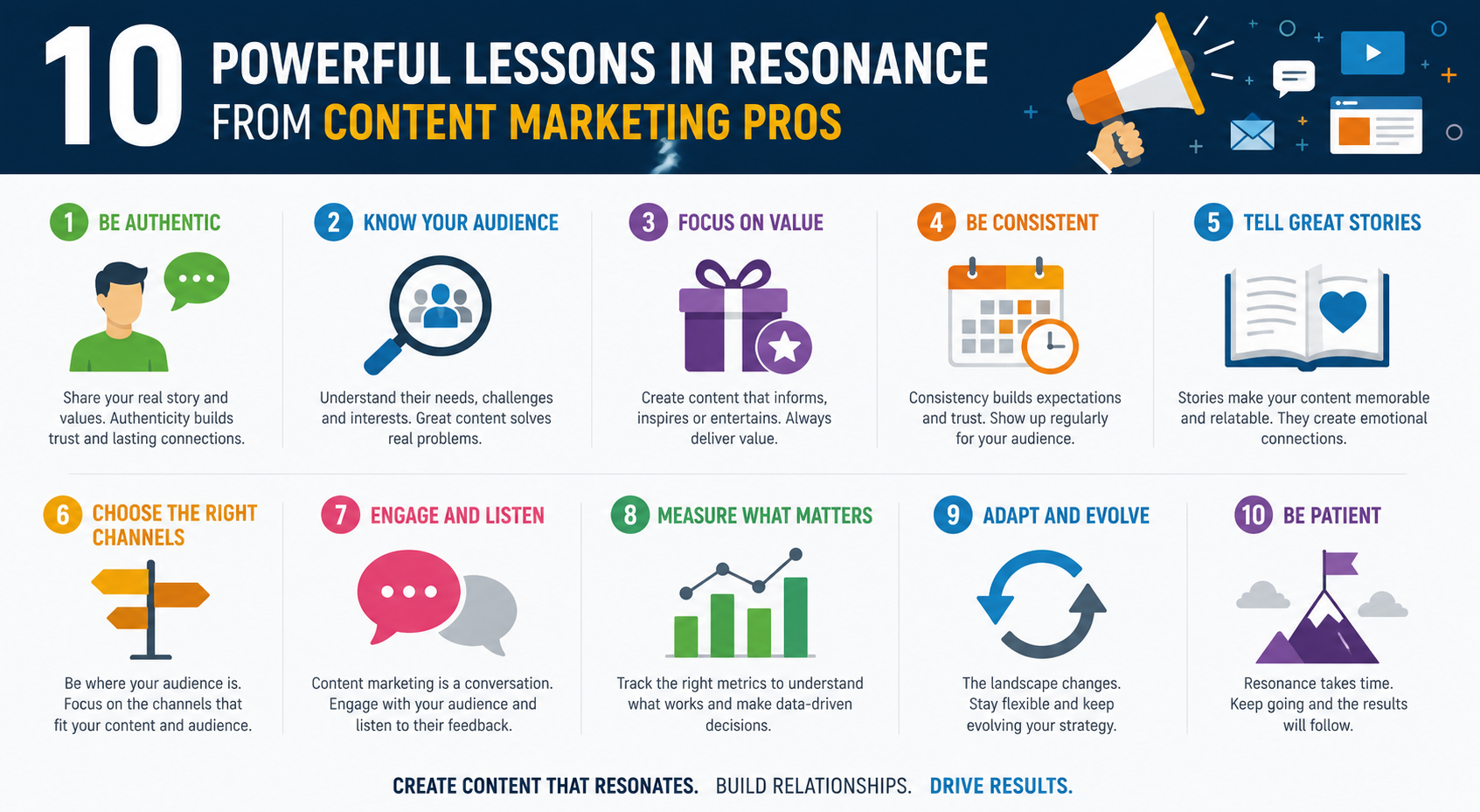
Introduction: why most content fails (and how to fix it)
Every day, thousands of articles, posts, and videos are published online… yet only a small percentage generate real results. Why? Because creating content isn’t the same as creating impactful content that converts.
The difference lies in strategy, positioning, and understanding your audience at a deeper level. Top content marketing experts have spent years refining what works—and what doesn’t.
In this guide, you’ll discover the most powerful lessons from content marketing professionals and how to apply them to grow your business, generate leads, and increase sales.
1. Focus on value, not volume
Publishing more content does not guarantee better results. In fact, excessive low-quality content can dilute your brand.
What high-performing marketers do differently
- Prioritize depth over frequency
- Solve real problems for their audience
- Deliver actionable insights
Example
Instead of publishing five generic blog posts per week, a SaaS company publishes one detailed guide that ranks on Google and attracts leads consistently.
👉 Quality content becomes a long-term asset.
2. Understand your audience deeply
Effective content starts with understanding who you’re speaking to.
Key elements to define
- Pain points
- Desires and goals
- Common objections
- Buying behavior
Practical approach
Create a buyer persona and ask:
- What keeps them awake at night?
- What solutions are they actively searching for?
👉 The better you understand your audience, the easier it is to create content that resonates.
3. Create content with a clear purpose
Every piece of content should have a defined objective.
Types of content goals
- Generate traffic
- Capture leads
- Educate prospects
- Drive conversions
Example
A blog post may aim to rank for SEO, while a landing page is designed to convert visitors into customers.
👉 Content without purpose is just noise.
4. Tell stories that connect
Storytelling is one of the most powerful tools in content marketing.
Why it works
- Creates emotional connection
- Makes content memorable
- Builds trust
Example
Instead of listing product features, share a real customer success story:
“How a freelancer doubled income using this strategy.”
👉 People remember stories, not specs.
5. Consistency builds authority
Consistency is key to building trust and authority in your niche.
What consistency looks like
- Regular publishing schedule
- Unified brand voice
- Cohesive visual identity
Example
Brands like HubSpot or Neil Patel maintain consistent tone, frequency, and value across all platforms.
👉 Authority is built over time, not overnight.
6. Optimize for SEO without losing human touch
Content must be discoverable—but also engaging.
SEO best practices
- Use relevant keywords naturally
- Structure content with headings (H2, H3)
- Optimize meta tags
Avoid this mistake
Writing content purely for search engines leads to robotic, low-quality experiences.
👉 Balance SEO and readability.
7. Distribution is as important as creation
Creating content is only half the job. Distribution determines reach.
Channels to leverage
- Social media platforms
- Email marketing
- Paid advertising
- Influencer collaborations
Example
A blog post can be repurposed into:
- LinkedIn posts
- Email newsletters
- Short-form videos
👉 Maximum visibility comes from strategic distribution.
8. Measure what truly matters
Not all metrics are equal.
Key performance indicators (KPIs)
- Conversion rate
- Time on page
- Lead generation
- Engagement rate
Avoid vanity metrics
Likes and views don’t always translate into revenue.
👉 Focus on metrics that impact business growth.
9. Repurpose content to scale faster
Smart marketers don’t create content from scratch every time.
Repurposing ideas
- Turn blog posts into videos
- Convert podcasts into articles
- Break long content into social media snippets
Example
One webinar can become:
- Multiple blog posts
- Email sequences
- Social media content
👉 Work smarter, not harder.
10. Build trust before selling
Content marketing is not about aggressive selling—it’s about building relationships.
Trust-building strategies
- Share expertise openly
- Provide free value
- Be transparent
Example
Offering a free guide or resource establishes credibility before pitching a product.
👉 People buy from brands they trust.
11. Align content with the customer journey
Different stages require different types of content.
Content funnel stages
- Awareness: educational blog posts
- Consideration: case studies, comparisons
- Decision: testimonials, demos
Example
A user discovering your brand needs information—not a hard sell.
👉 Match content to intent.
12. Use data to refine your strategy
Content marketing is an iterative process.
What to analyze
- Which topics perform best
- Where traffic comes from
- Conversion behavior
Tools
- Google Analytics
- SEO platforms (Ahrefs, SEMrush)
- CRM systems
👉 Data-driven decisions outperform guesses.
Practical example: applying these lessons
Imagine a digital marketing agency:
Before
- Sporadic content
- No clear audience focus
- Low conversions
After implementing strategy
- Defined buyer personas
- Weekly SEO-driven content
- Strong distribution across channels
👉 Result: increased traffic, qualified leads, and sales growth.
Common mistakes to avoid
Even experienced marketers fall into traps.
Top errors
- Creating content without strategy
- Ignoring SEO fundamentals
- Focusing only on quantity
- Not measuring performance
👉 Avoiding these mistakes accelerates results.
Conclusion: content that converts is strategic
Content marketing is no longer optional—it’s essential for growth in digital businesses. But success comes from strategy, not volume.
By applying these lessons, you can create content that not only attracts attention but also delivers measurable results.
Start optimizing your content today
Don’t wait to improve your strategy:
✅ Audit your existing content
✅ Define clear objectives
✅ Focus on value and audience needs
✅ Measure and optimize continuously
Because in today’s competitive landscape, the brands that win are not the ones that create more content… but the ones that create better, smarter, and more strategic content.
Deja un comentario