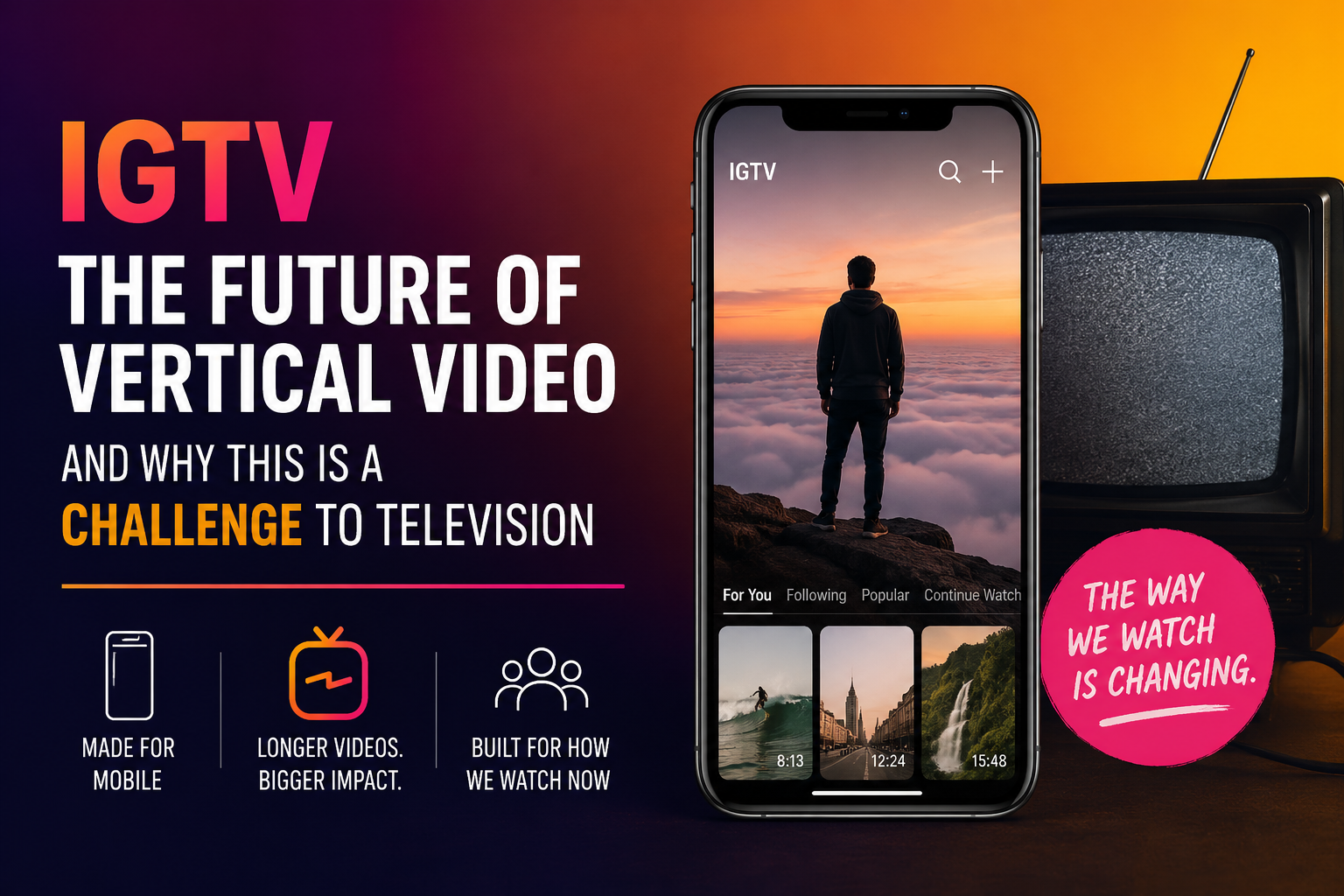
Introduction: Why Vertical Video Changed Everything
In 2018, Instagram launched IGTV with an ambitious goal: to redefine how people consume long-form video content on mobile devices. At the time, the move was seen as a bold challenge to traditional television and platforms like YouTube.
IGTV wasn’t just another feature — it represented a fundamental shift in how content is created, distributed, and consumed. By prioritizing vertical video, Instagram challenged decades of horizontal content dominance and bet on something radical: that the future of video would be shaped by how people naturally hold their phones.
Fast forward to today, and while IGTV as a standalone product no longer exists in its original form, its impact has been profound. It helped accelerate the rise of mobile-first video, influenced the explosion of short-form content like Reels, and forced marketers to rethink storytelling strategies.
This article explores:
- The original vision behind IGTV
- Why vertical video sparked debate
- How it challenged traditional television models
- What happened to IGTV
- And most importantly, what brands must do today to capture attention and generate leads with video
The Birth of IGTV: A Bold Move by Instagram
When IGTV launched in June 2018, it allowed users to upload longer videos than ever before — up to 10 minutes for most users and up to 60 minutes for larger accounts. [marketingscoop.com]
This was a major shift from Instagram’s traditional format:
- Feed videos: limited to 1 minute
- Stories: limited to 15 seconds
- IGTV: full-length vertical experiences
The vision was clear:
Instagram wanted to become a serious player in long-form video — and compete with platforms like YouTube.
At the same time, Facebook (now Meta) was heavily investing in video content, including initiatives like Facebook Watch, signaling a broader strategy to dominate video consumption. [businessesgrow.com]
But IGTV introduced one critical difference:
👉 All videos were designed to be vertical and full-screen.
The Big Bet: Vertical Video as the Default Format
For decades, video content followed a horizontal format — designed for cinema screens, televisions, and later laptops.
IGTV flipped that assumption.
Instagram argued that vertical video aligns with natural smartphone behavior:
- People hold phones vertically
- Switching to horizontal creates friction
- Full-screen immersion increases engagement
This idea wasn’t just theoretical — it reflected real behavior patterns.
And yet, many experts were skeptical.
The Key Question:
Would users really watch long-form content vertically?
The skepticism was understandable. Watching a 40-minute documentary in vertical format felt counterintuitive for many users. [businessesgrow.com]
However, early examples proved otherwise.
Major brands like National Geographic uploaded long-form content, and viewers:
- Watched full-length episodes
- Engaged deeply
- Questioned whether traditional TV was even necessary
One comment stood out:
“Who needs TV?”
This wasn’t just a reaction — it was a signal.
IGTV vs Traditional Television: A New Content Paradigm
IGTV wasn’t just competing with YouTube.
It was challenging television itself.
Key Differences Between IGTV and Traditional TV
| Feature | Traditional TV | IGTV |
|---|---|---|
| Format | Horizontal | Vertical |
| Device | TV screens | Smartphones |
| Distribution | Schedules | On-demand |
| Entry barrier | High | Anyone can create |
| Interaction | Passive | Interactive (likes, comments, sharing) |
IGTV democratized video creation.
Anyone — not just production studios — could:
- Launch a “channel”
- Publish shows
- Build an audience
This shift was critical.
The Rise of the Creator Economy
IGTV helped accelerate a transition where:
- Individuals became media brands
- Influencers became broadcasters
- Content became more personal and direct
Instagram aimed to create a system where creators could build audiences similar to YouTube’s ecosystem — potentially even earning revenue through ads and partnerships. [chicago.suntimes.com]
Why IGTV Struggled (and What Happened Next)
Despite its innovative approach, IGTV faced several challenges.
1. User Behavior Favored Shorter Content
Even though long-form content was available, users preferred:
- Quick entertainment
- Snackable videos
- Instant gratification
2. Discoverability Issues
Many creators struggled to get visibility compared to feed posts and Stories.
3. Competition from Emerging Formats
Short-form video exploded in popularity, especially:
- TikTok-style content
- Instagram Reels
Eventually, Meta decided to integrate IGTV into the main Instagram video experience, phasing out the standalone app. [kicksta.co]
IGTV’s Real Legacy: It Shaped Modern Video Marketing
Even though IGTV as a product evolved, its impact is undeniable.
1. It Normalized Vertical Video
Today, vertical video dominates:
- Reels
- TikTok
- YouTube Shorts
2. It Enabled Long-Form Mobile Storytelling
Brands learned how to tell deeper stories on mobile devices.
3. It Accelerated Video Adoption
Video now represents a major share of online content consumption across platforms. [earthweb.com]
4. It Changed Marketing Forever
Brands now use video to:
- Educate
- Entertain
- Build trust
- Drive conversions
The State of Video in 2026: What You Need to Know
Today, the Instagram ecosystem looks very different.
Key Trends:
- Reels dominate user attention and reach
- Video is central to engagement across all formats
- Algorithms prioritize content that keeps users watching
For example:
- Reels account for a large portion of time spent on Instagram and reach billions of users globally. [newengen.com]
At the same time:
- Long-form video still plays a role in building deeper connections
- Integrated video formats have replaced IGTV
How to Use Vertical Video Today to Generate Leads
This is where most businesses fail.
They create content — but don’t build systems that convert attention into leads.
Here’s how to do it right.
1. Think “Content Funnel,” Not Just Videos
Don’t just post videos.
Build a journey:
- Awareness → Short-form video (Reels)
- Interest → Mid-length educational content
- Decision → Long-form video or landing page
Use vertical video at each stage.
2. Capture Leads Inside the Content Strategy
Your videos must drive action.
Include:
- Clear CTAs
- Link in bio strategy
- Lead magnets (ebooks, webinars, etc.)
Example:
👉 “Download our free guide to video marketing — link in bio”
3. Use Long-Form Content to Build Authority
Short videos get attention.
Long videos build trust.
Use long-form vertical or integrated video for:
- Tutorials
- Case studies
- Behind-the-scenes content
- Product education
This aligns with IGTV’s original purpose.
4. Optimize Videos for SEO and Discovery
Video SEO matters more than ever.
Best practices:
- Keyword-rich titles
- Optimized descriptions
- Captions (important for silent viewing)
- Strong hooks in the first seconds
5. Focus on Storytelling, Not Production
The biggest shift in content marketing is this:
👉 Authenticity beats production value.
You don’t need:
- Expensive cameras
- Studio setups
You need:
- Clear message
- Strong narrative
- Consistency
6. Build a Repeatable Content System
Winning brands don’t guess.
They systematize:
- Content calendar
- Formats (educational, storytelling, sales)
- Metrics tracking
Consistency is the real growth driver.
The Future of Vertical Video
The original IGTV vision was ahead of its time.
Today we see its evolution:
- Video-first platforms
- Mobile-first design
- Creator-driven content ecosystems
Long-form video hasn’t disappeared.
It has been integrated into a broader strategy.
The future is not short vs long.
It’s:
👉 The right format, for the right moment, in the right funnel.
Conclusion: From IGTV to the Future of Content
IGTV may no longer exist as it once did, but its legacy lives on in every vertical video we consume today.
It challenged:
- Traditional viewing habits
- The dominance of TV
- The structure of media production
More importantly, it forced marketers to rethink how to:
- Capture attention
- Build relationships
- Generate leads
🚀 Want to Turn Video Into Leads Consistently?
If you’re serious about using video to grow your business:
👉 Start building a video-driven funnel strategy today
- Create content with intention
- Optimize for discovery
- Capture leads at every stage
Final Thought
IGTV wasn’t the end goal.
It was the beginning of a new era.
And that era belongs to those who know how to turn attention into revenue.
Deja un comentario