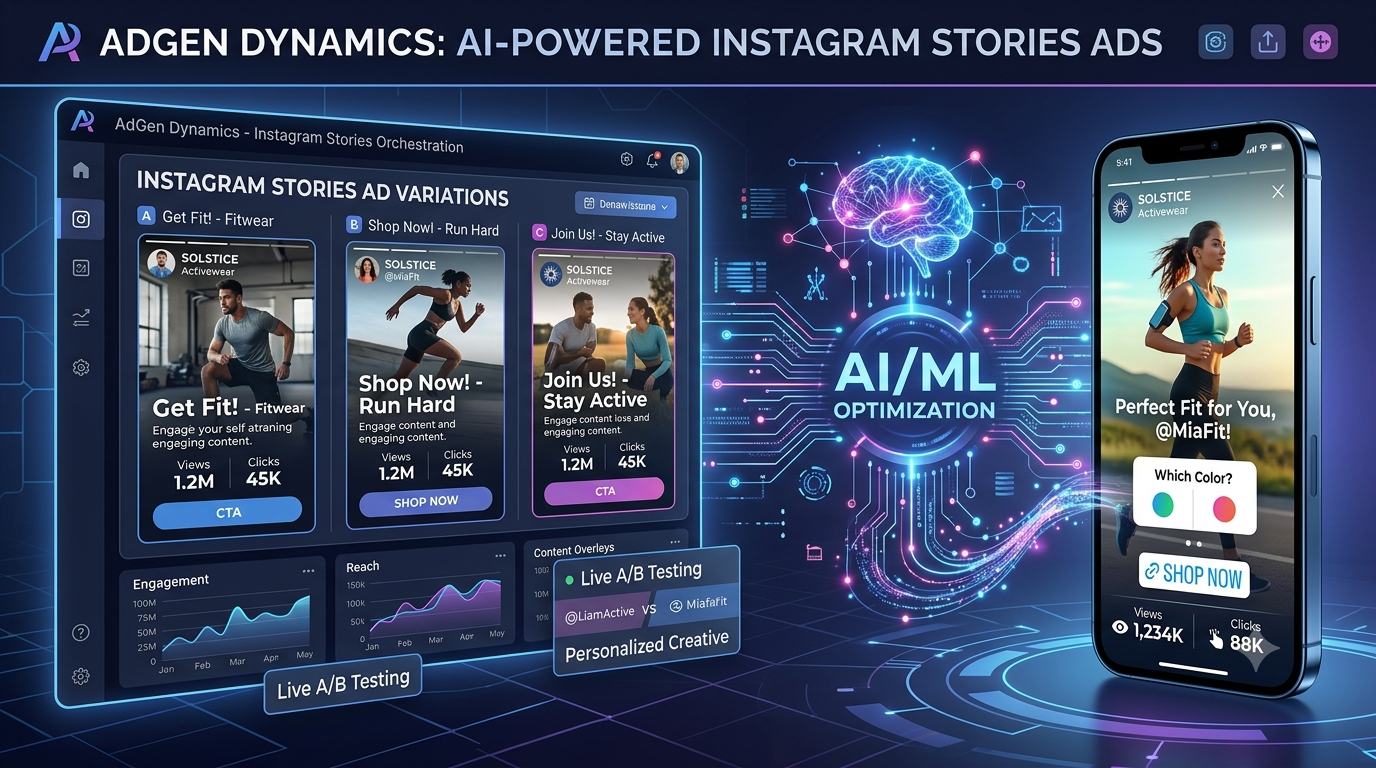
In today’s digital-first economy, attention has become the most valuable currency. Consumers are exposed to thousands of marketing messages every day across social media platforms, websites, streaming services, and mobile applications. In this highly competitive environment, brands face a growing challenge: how to deliver personalized, relevant, and engaging content at scale without dramatically increasing production costs.
For years, marketers relied on a traditional advertising model where creative teams developed a handful of campaign assets that were distributed broadly across audiences. While this approach worked in the era of mass media, it is increasingly ineffective in a world where consumers expect tailored experiences that reflect their interests, behaviors, and preferences.
This shift has fueled the rise of dynamic creative optimization and automated advertising technologies. Among the companies leading this transformation is Clinch, a marketing technology platform specializing in data-driven creative production. By introducing tools that dynamically generate Instagram Stories advertising variations, Clinch signaled an important milestone in the evolution of social media marketing.
The company’s innovation goes beyond merely automating ad creation. It represents a broader movement toward intelligent, personalized, and scalable advertising that allows brands to deliver the right message to the right audience at precisely the right moment.
The Evolution of Digital Advertising
To understand the significance of dynamic creative technology, it’s important to examine how digital advertising has evolved over the past decade.
Originally, marketers produced a single advertisement designed to reach the broadest possible audience. Success depended heavily on media buying power, making it difficult for smaller brands to compete against companies with larger budgets.
The arrival of social media platforms changed everything.
Platforms such as Facebook, Instagram, YouTube, TikTok, and LinkedIn introduced unprecedented audience segmentation capabilities. Suddenly, advertisers could target users based on demographics, interests, behaviors, locations, purchase intent, and thousands of other signals.
However, while media targeting became increasingly sophisticated, creative production remained largely manual.
Marketers could identify dozens of audience segments but often lacked the resources to create customized content for each group.
This gap gave rise to dynamic creative optimization (DCO), a marketing strategy focused on automatically generating multiple ad variations using data and automation.
Why Instagram Stories Became a Critical Advertising Channel
Instagram Stories transformed user behavior from passive content consumption into an immersive, full-screen mobile experience.
Unlike traditional feed advertising, Stories occupy the entire smartphone screen, eliminating distractions and creating a highly engaging environment.
Several factors contributed to the rapid growth of Stories as a marketing channel:
Mobile-first consumption
Today’s consumers spend a significant portion of their online time on mobile devices.
Stories are designed specifically for vertical mobile viewing, making them naturally aligned with modern consumption habits.
Short attention spans
Most Stories last between a few seconds and fifteen seconds.
This format caters perfectly to users who consume information quickly and expect immediate value.
Immersive experiences
The full-screen format captures attention more effectively than standard display advertising.
Brands have more opportunities to create emotional connections through motion, sound, animation, and interactivity.
High engagement rates
Interactive features such as polls, quizzes, swipe actions, reaction buttons, and product tags encourage active participation from users.
As Stories became one of Instagram’s most viewed content formats, advertisers recognized the enormous opportunity they presented.
However, creating multiple Story variations manually posed significant challenges.
The Creative Production Bottleneck
One of the biggest obstacles facing modern marketers is creative fatigue.
Audiences become accustomed to seeing the same advertisements repeatedly, leading to declining performance over time.
To maintain engagement, brands must continually refresh creative assets.
Consider a global retailer launching an Instagram campaign targeting:
- Different countries
- Multiple languages
- Various age groups
- Separate product categories
- Distinct promotional offers
Creating hundreds or thousands of unique Story ads manually would be extremely costly and time-consuming.
This challenge is precisely what dynamic creative platforms aim to solve.
What Is Dynamic Creative?
Dynamic creative refers to advertising content that automatically adapts using data inputs and predefined design templates.
Instead of building every advertisement from scratch, marketers create flexible frameworks that can pull content from various sources.
These sources may include:
- Product catalogs
- Pricing databases
- Inventory systems
- Customer segments
- Geolocation data
- Promotional calendars
- Behavioral signals
The platform then automatically combines elements such as:
- Images
- Video clips
- Headlines
- Calls to action
- Branding assets
- Offers
The result is a potentially limitless number of personalized ad variations.
How Clinch’s Technology Works
Clinch introduced an innovative solution specifically designed for Instagram Stories.
The process begins with the creation of an interactive template.
This template acts as a creative foundation containing brand elements, animation guidelines, layouts, and interaction mechanisms.
Once the framework is established, it connects to multiple asset sources such as:
- Product photography
- Promotional graphics
- Video clips
- Inventory feeds
- Marketing databases
The system then dynamically assembles ad versions based on selected criteria.
For example, two users may see completely different advertisements despite being part of the same campaign.
A customer who recently browsed sports apparel might receive a Story highlighting athletic products.
Another customer interested in luxury accessories may see premium fashion items instead.
Both experiences originate from the same campaign architecture but are customized according to audience data.
The Rise of Personalization in Marketing
Personalization has become one of the most important competitive advantages in digital marketing.
Modern consumers expect brands to understand their preferences.
Generic messaging increasingly struggles to drive engagement.
Research consistently shows that personalized experiences lead to:
- Higher click-through rates
- Improved conversion rates
- Increased customer satisfaction
- Better brand perception
- Stronger customer loyalty
The challenge has always been scalability.
Creating customized experiences for millions of users was impossible using traditional production methods.
Dynamic creative technology solves this problem by automating personalization while maintaining brand consistency.
Data: The Engine Behind Dynamic Advertising
Dynamic creative systems depend heavily on data.
Data determines which creative combination should appear for each audience segment.
Some common data sources include:
Behavioral data
- Website visits
- Product views
- Cart abandonment
- Previous engagement
Demographic data
- Age
- Gender
- Location
- Language
Contextual data
- Weather conditions
- Time of day
- Local events
- Device type
Transactional data
- Purchase history
- Loyalty status
- Average order value
When combined effectively, these signals create highly relevant advertising experiences.
Why Advertisers Are Embracing Automation
Marketing departments are under constant pressure to achieve better results while controlling costs.
Automation provides several major advantages.
Increased efficiency
Teams can generate hundreds of ad variations without manually designing each version.
Faster campaign deployment
New campaigns can launch in hours instead of weeks.
Improved performance
Continuous testing enables marketers to identify winning creative combinations more quickly.
Better scalability
Global organizations can deliver localized experiences across multiple markets simultaneously.
Reduced production costs
Creative resources can be allocated more strategically instead of producing repetitive variations.
The Power of Creative Testing
One of the most valuable aspects of dynamic advertising is the ability to conduct large-scale testing.
Traditionally, marketers might test:
- Two headlines
- Two images
- Two calls to action
That would produce eight possible combinations.
Dynamic creative technology can test hundreds or thousands of combinations simultaneously.
This enables brands to gather powerful insights about:
- Which visuals attract attention
- Which messages drive engagement
- Which offers increase conversions
- Which audience segments respond best
Over time, machine learning algorithms can further optimize performance by prioritizing top-performing combinations.
Instagram Stories and Consumer Psychology
The success of Stories advertising is closely linked to consumer behavior.
Stories create a sense of immediacy.
Because content disappears after a limited period, users often feel compelled to view it before it vanishes.
This psychological effect increases engagement and attention levels.
Additionally, Stories mimic natural content consumption patterns.
Users move quickly from one piece of content to another, making ads feel less intrusive when executed properly.
The best Stories advertisements blend seamlessly into the user experience while still delivering clear marketing objectives.
The Growing Role of Artificial Intelligence
The future of dynamic creative advertising extends far beyond automation.
Artificial intelligence is becoming increasingly integrated into creative production processes.
Modern AI systems can assist with:
- Copy generation
- Asset selection
- Audience prediction
- Creative optimization
- Performance forecasting
As these technologies mature, advertisers will gain unprecedented capabilities to personalize content at scale.
Future campaigns may automatically adapt in real time based on consumer engagement patterns.
Challenges Brands Must Address
Despite its advantages, dynamic creative technology is not without challenges.
Brand consistency
Automated systems must ensure every variation aligns with brand standards.
Data quality
Poor or inaccurate data can lead to irrelevant experiences.
Privacy concerns
Brands must carefully manage customer information while complying with evolving regulations.
Creative strategy
Automation cannot replace strategic thinking.
Strong creative concepts remain essential.
Technology amplifies good ideas but cannot compensate for weak messaging.
The Future of Social Media Advertising
The advertising landscape is entering a new era defined by personalization, automation, and intelligent optimization.
Several trends are expected to shape the future:
Real-time content generation
Ads will increasingly adapt instantly based on live data.
Hyper-personalization
Experiences will become more relevant at the individual user level.
AI-driven creative development
Machine learning will play a larger role in creative production and optimization.
Cross-channel integration
Campaigns will operate seamlessly across Instagram, Facebook, YouTube, streaming television, websites, and emerging platforms.
Interactive commerce
Advertising, content, and shopping experiences will become increasingly interconnected.
Strategic Lessons for Modern Marketers
The rise of platforms like Clinch offers valuable lessons for brands seeking growth in today’s digital marketplace.
First, personalization is no longer optional. Consumers expect relevant experiences and increasingly ignore generic messaging.
Second, creative agility has become a competitive advantage. Brands must respond rapidly to changing consumer behaviors and market conditions.
Third, data and creativity should not be viewed as opposing forces. The most successful campaigns combine analytical precision with emotional storytelling.
Finally, automation should enhance human expertise rather than replace it. Technology can scale execution, but strategic insight remains a uniquely human capability.
Conclusion
Clinch’s launch of dynamic Instagram Stories advertising technology represents more than a product innovation. It symbolizes the broader transformation taking place across the marketing industry.
As consumer expectations continue to evolve, brands must find ways to deliver personalized, engaging, and relevant experiences at unprecedented scale. Dynamic creative platforms provide an effective solution by combining data, automation, and creativity into a unified marketing framework.
The future of advertising will not belong to the brands with the biggest budgets alone. It will belong to those capable of using technology intelligently to create meaningful, personalized interactions with their audiences.
In a world overflowing with content, relevance has become the ultimate differentiator. Dynamic creative advertising gives marketers the tools to ensure every impression matters, every interaction feels personal, and every campaign delivers greater value for both brands and consumers.
Deja una respuesta