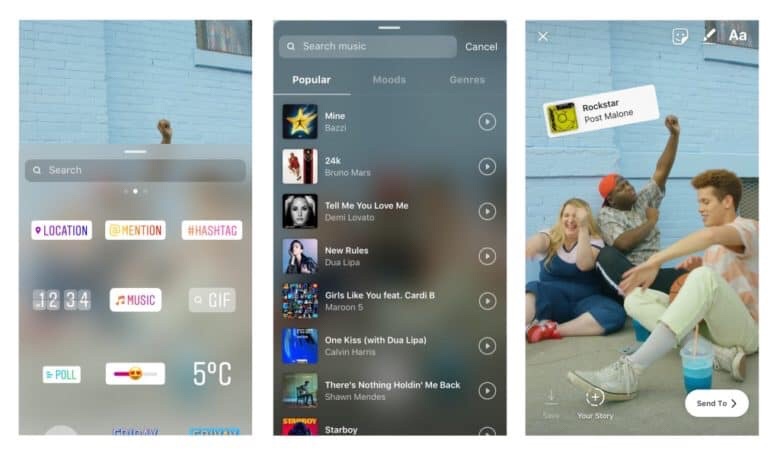
Introduction: When a Small Feature Changes an Entire Platform
At first glance, adding music to Instagram Stories seemed like a minor update.
A sticker.
A simple overlay.
Just another feature in a fast-evolving platform.
But in reality, the introduction of music soundtracks into Stories marked a significant shift—not just for Instagram, but for how content is created, shared, and consumed.
Because this feature didn’t just add sound.
👉 It added emotion.
👉 It added storytelling power.
👉 It lowered the barrier to creativity.
And most importantly, it changed how brands and users communicate.
This article explores how such a seemingly small update reflects broader trends in content creation, social media behavior, and digital marketing strategy.
1. The Context: Instagram’s Evolution Into a Content Ecosystem
1.1 From photo-sharing app to media platform
Instagram started as a simple photo-sharing app focused on:
- Visual aesthetics
- Filters
- Static content
But over time, it evolved into something much bigger:
- Stories
- Video formats
- Reels
- Live streaming
- Shopping integrations
This transformation reflects a broader shift:
👉 Social media is no longer about posting content—it’s about building immersive experiences.
1.2 The rise of Stories
Instagram Stories became one of the platform’s most important features because they:
- Are temporary (24-hour lifespan)
- Encourage frequent posting
- Foster more authentic content
Stories changed user behavior:
- Less polished
- More spontaneous
- More narrative-driven
1.3 The need for new layers of expression
As content volume increased, differentiation became harder.
Users needed new tools to:
- Stand out
- Express personality
- Capture attention quickly
Music became one of those tools.
2. Why Music Matters in Content
2.1 Emotion drives engagement
Music is one of the most powerful emotional triggers.
It can:
- Change mood instantly
- Reinforce meaning
- Create memory associations
When added to content, it transforms:
👉 a simple video into an emotional experience
2.2 Sound as a storytelling layer
Before this feature, Stories were largely:
- Visual
- Silent (unless users turned on sound)
With music, content gained a new layer:
- Narrative depth
- Context
- Tone
The same video can feel completely different depending on the soundtrack.
2.3 The psychology of music in media
Music influences:
- Perception of quality
- Emotional connection
- Recall
This is why:
- Ads use jingles
- Films use scores
- Brands use sound identities
Instagram brought this capability to everyone.
3. Democratizing Creativity
3.1 From professionals to everyone
Before, creating high-quality audiovisual content required:
- Editing tools
- Technical knowledge
- Creative skills
With Instagram music:
👉 anyone could create engaging content instantly
3.2 Lowering the barrier to entry
This feature simplified:
- Content creation
- Emotional storytelling
- Personal expression
It turned users into creators without requiring expertise.
3.3 The rise of “casual creativity”
The result was a new type of content:
- Less polished
- More frequent
- More expressive
This aligns with a broader trend:
👉 authenticity over perfection
4. The Strategic Play: Why Instagram Introduced Music
4.1 Increasing user engagement
Music makes content:
- More engaging
- More shareable
- More memorable
This increases:
- Time spent on the platform
- Interaction rates
- Content consumption
4.2 Competing with other platforms
Platforms like:
- Snapchat
- TikTok (emerging strongly after 2018)
were already embracing multimedia storytelling.
Instagram needed to evolve.
4.3 Strengthening the content ecosystem
By adding music, Instagram:
- Expanded creative possibilities
- Encouraged more posting
- Increased platform stickiness
5. The Impact on Users
5.1 Expression and identity
Music allowed users to:
- Express mood
- Showcase personality
- Communicate emotions
It became part of identity.
5.2 Content differentiation
In a crowded feed, music helps content stand out:
- Grabbing attention
- Creating contrast
- Adding uniqueness
5.3 Social signaling
Song choices also act as signals:
- Taste
- Culture
- Trends
6. The Impact on Brands
6.1 From static messaging to storytelling
Brands moved from:
- Product-centric posts
to - Story-driven content
Music enables:
- Emotional branding
- Narrative sequences
- Lifestyle positioning
6.2 Humanizing communication
Music makes content feel:
- Less corporate
- More relatable
- More engaging
6.3 Faster content production
Brands can now produce content:
- Faster
- Cheaper
- More frequently
7. The Rise of Audio Branding
7.1 What is audio branding?
Audio branding involves using sound to create brand identity:
- Music
- Voice
- Sound effects
7.2 Why it matters
Sound enhances:
- Recognition
- Recall
- Emotional connection
7.3 Instagram as an audio branding platform
With music integration, Instagram became:
👉 a testing ground for brand sound identity
8. Content Strategy in the Age of Music
8.1 Matching sound to message
Choosing the right music is critical:
- Tone must align with content
- Emotion must match intent
8.2 Timing and rhythm
Music affects:
- Video pacing
- Editing style
- Engagement flow
8.3 Trends and relevance
Music is linked to trends:
- Viral songs
- Cultural moments
Using them increases reach.
9. The Shift Toward Entertainment
9.1 Social media as entertainment
Users increasingly expect:
- Entertainment
- Engagement
- Emotion
9.2 Content must compete with media
Instagram content competes with:
- Netflix
- YouTube
- TikTok
Music helps bridge that gap.
10. Risks and Challenges
10.1 Overuse and sameness
Too many users using the same songs can lead to:
- Lack of originality
- Content fatigue
10.2 Misalignment
Wrong music can:
- Confuse the message
- Damage brand perception
10.3 Dependence on trends
Relying too much on trends makes brands:
- Reactive
- Less distinctive
11. Lessons for Marketers
11.1 Emotion is essential
Content must connect emotionally.
11.2 Simplicity wins
Tools that simplify creation increase adoption.
11.3 Speed matters
The faster you create, the more relevant you stay.
11.4 Adaptability is key
Platforms evolve constantly.
12. The Future of Social Content
12.1 Multisensory experiences
Content will continue to integrate:
- Visual
- Audio
- Interactive elements
12.2 AI-driven personalization
Music and content will become:
- Personalized
- Context-aware
12.3 Creator economy growth
More tools = more creators = more competition.
13. What This Means for Brands Today
To succeed, brands must:
- Think like creators
- Use emotion strategically
- Adapt to platform features
Conclusion: More Than Just a Song
Adding music to Instagram Stories was not just a feature update.
It was a signal.
A signal that:
- Content is evolving
- Emotion is central
- Creativity must be accessible
In a world where attention is scarce, the brands and creators that win are those who:
- Capture emotion quickly
- Communicate clearly
- Engage consistently
Music helps achieve all three.
Final Thought
If a simple soundtrack can transform a story…
👉 what could it do for your brand?
CTA
Next time you create content, ask yourself:
👉 Are you just showing something…
or are you making people feel something?
Because that’s where the difference lies.
Leave a comment