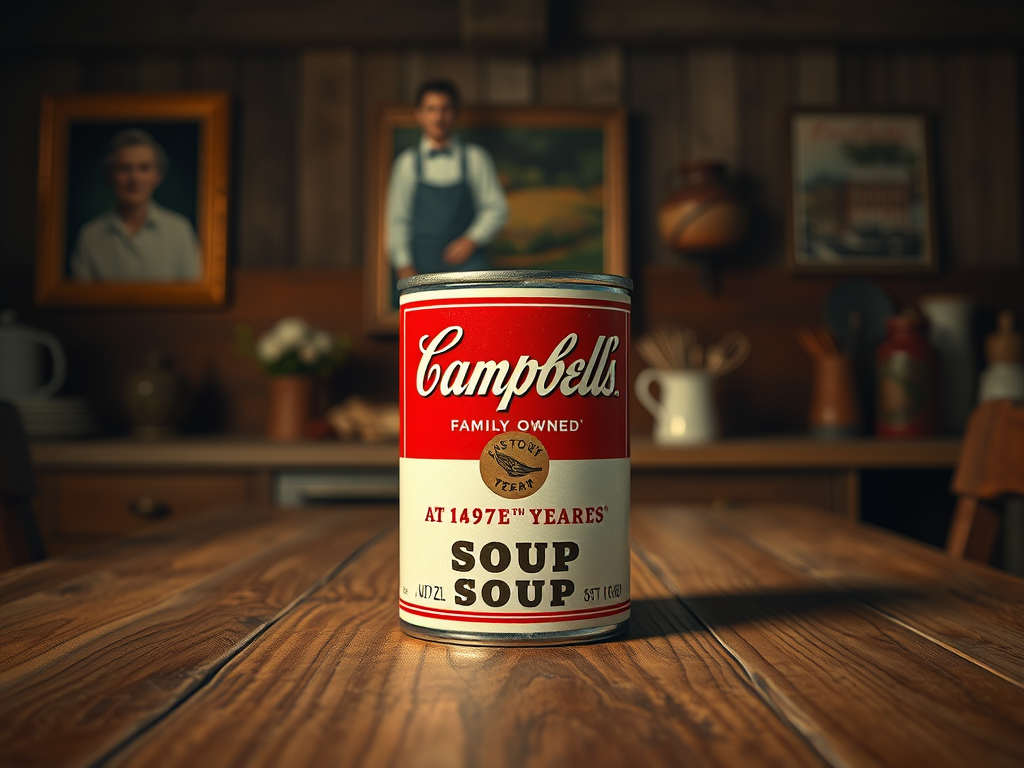
Campbell Soup Company, one of America’s most iconic food brands, was founded in 1869 — just a few years after the end of the U.S. Civil War. For most of its 150+ years, it has been much more than a publicly traded company. It has been, in many ways, a family treasure, deeply tied to the descendants of John T. Dorrance, the man credited with inventing condensed soup.
Yet in recent years, a question has begun to loom over the company: Will Campbell Soup remain under family influence, or is it headed toward a future without that historic connection?
The Changing Dynamics of Family-Owned Public Companies
Campbell is currently undergoing an operational review — a thorough assessment of its portfolio, operations, and strategic position in the market. The process is being described internally as having “no sacred cows,” meaning that nothing, not even the company’s long-standing identity or ownership structure, is immune from consideration.
While some in the industry speculate this could mean Campbell might even explore selling the entire company, this isn’t the first time such rumors have surfaced. Each time before, the company — supported by its powerful family shareholders — has resisted selling. Instead, it reaffirmed its independence and kept control within the family’s sphere.
But times have changed.
The Dorrance descendants are now into their fourth generation. Some have reduced their stake in Campbell; others have been far removed from the day-to-day operations for decades. The shared sense of mission that once united the family is more diffuse, and younger generations often see their shares primarily as financial assets, not as guardianship of a heritage.
Why This Matters Beyond Campbell
The Campbell story is emblematic of a broader trend among legacy family-controlled public companies. Many such companies are grappling with:
- Generational turnover — later generations are often more diversified in their careers and investments, less tied to the original business.
- Market pressures — the food industry is rapidly changing, with evolving consumer tastes, health trends, and competition from fresh, organic, and ready-to-eat alternatives.
- Investor demands — public shareholders, including activist investors, push for changes to increase short-term returns, which can conflict with a family’s long-term vision.
Similar Case Studies
To better understand Campbell’s position, it’s useful to look at similar situations faced by other family-controlled companies.
| Company | Founded | Family Involvement Today | Strategic Crossroads | Outcome / Current Direction |
|---|---|---|---|---|
| Campbell Soup | 1869 | Fourth-generation Dorrance descendants are largest shareholders | Operational review, declining soup sales, changing market tastes | Future uncertain — possible divestitures or sale |
| Ford Motor Company | 1903 | Ford family controls ~40% voting power via special shares | Faced declining market share and EV disruption | Chose to remain family-controlled, invested heavily in EV technology |
| The New York Times Co. | 1851 | Ochs-Sulzberger family maintains control through dual-class shares | Pressure from digital disruption of print media | Stayed independent, invested in digital subscriptions — now profitable |
| Hershey Company | 1894 | Controlled by Milton Hershey School Trust | Faced pressure to sell in 2002 | Remained independent, refocused brand on premium chocolate and snacking |
| Anheuser-Busch | 1852 | Busch family influence faded after acquisition | Financial strain, global competition | Sold to InBev in 2008, ending family control |
| Estee Lauder Companies | 1946 | Lauder family retains significant influence | Adapting to e-commerce and beauty trends | Continued growth via acquisitions and digital focus |
Patterns Emerging from the Examples
Across these cases, we see three main strategies family-controlled public companies often choose when facing a crossroads:
- Reinforce Family Control
- Double down on ownership and management roles.
- Example: Ford Motor Company ensured the Ford family still had special voting rights while shifting strategy toward electric vehicles.
- Transform and Modernize
- Bring in outside executives while keeping family influence on strategic decisions.
- Example: The New York Times embraced digital transformation without giving up its family-controlled structure.
- Sell or Merge
- Opt for acquisition or merger to maximize shareholder value when maintaining control is no longer practical.
- Example: Anheuser-Busch sale to InBev.
Why Campbell Might Lean in Either Direction
Reasons to Keep It in the Family:
- Brand heritage: Campbell’s red-and-white label is as American as Coca-Cola.
- Control of legacy: Family can ensure the company remains aligned with its original values.
- Long-term vision: Families often think beyond quarterly earnings.
Reasons to Consider a Sale or Major Strategic Shift:
- Declining core category: Canned soup sales have been stagnant or falling in the U.S.
- Generational distance: Fourth-generation heirs may not feel the same emotional connection.
- Market disruption: Health-conscious and fresh-food brands are reshaping consumer preferences.
Applications for Business Strategy
The lessons from Campbell and similar cases have practical applications for entrepreneurs, investors, and family business owners.
| Scenario | Strategic Application | Example |
|---|---|---|
| Founders planning succession | Build governance structures early to maintain unity | Ford’s special voting shares preserve family control |
| Declining legacy product sales | Diversify into high-growth categories | Hershey’s expansion into healthier snacking |
| Investor pressure for change | Communicate long-term vision clearly to shareholders | The New York Times’ subscription model success |
| Generational disengagement | Create roles that allow next-gen members to contribute meaningfully | Estee Lauder’s younger family members leading digital strategy |
The Consumer Revolution That Changed the Food Industry
One of the most important forces shaping Campbell’s future is the dramatic transformation of consumer preferences over the past two decades. The food industry that helped Campbell become a household name is very different from the industry that exists today.
For much of the twentieth century, convenience was the dominant factor in food purchasing decisions. Consumers sought products that were affordable, shelf-stable, easy to prepare, and widely available. Campbell’s condensed soups perfectly matched those needs and became staples in millions of homes.
Today’s consumers, however, often prioritize different criteria. Health consciousness, ingredient transparency, sustainability, freshness, and nutritional value increasingly influence buying decisions. Shoppers are more likely to read ingredient labels, compare nutritional information, and research brands before making purchases.
This shift has created challenges for many legacy food manufacturers. Products that once represented convenience and reliability are now sometimes viewed as overly processed or inconsistent with modern dietary preferences. As consumer expectations evolve, companies must decide whether to defend their traditional products, reformulate them, or diversify into entirely new categories.
Campbell’s challenge is not unique. Many established food brands have struggled to adapt to changing consumer demands while preserving the identity that made them successful in the first place. The balance between innovation and heritage has become one of the most difficult strategic questions facing consumer goods companies.
The companies that succeed are often those that recognize change early and respond proactively rather than reactively. They understand that preserving a brand’s legacy does not necessarily mean preserving every product exactly as it existed decades ago. Instead, it means preserving the trust that consumers place in the brand while adapting to new realities.
The Leadership Challenge of Managing a Legacy Brand
Running a company with more than 150 years of history creates unique managerial challenges. Leaders must simultaneously honor the past, manage the present, and prepare for the future.
For Campbell, this challenge is especially significant because the company represents more than a collection of products. It occupies a unique place in American business history and popular culture. Few brands can claim the level of recognition associated with Campbell’s iconic red and white cans.
This heritage brings both advantages and disadvantages.
On one hand, brand recognition reduces marketing costs and creates a level of customer familiarity that many younger companies spend decades trying to achieve. Consumers know the brand, retailers trust it, and investors recognize its historical significance.
On the other hand, strong heritage can create organizational inertia. Employees, executives, shareholders, and customers may become emotionally attached to products or business models that no longer reflect market realities.
Successful leaders of legacy companies must therefore become agents of transformation without appearing to reject the company’s history. They must communicate that adaptation is not abandonment. The objective is to ensure that a company survives another century, not merely preserve a snapshot of its past.
History shows that brands rarely fail because they change too quickly. More often, they struggle because they change too slowly.
Activist Investors and the New Corporate Landscape
Another factor influencing Campbell’s crossroads is the growing influence of activist investors.
Activist investors purchase significant stakes in public companies and advocate strategic changes they believe will increase shareholder value. Their recommendations may include restructuring operations, selling divisions, replacing executives, changing governance practices, repurchasing shares, or even selling the entire company.
For family-controlled companies, activist investors often create tension between short-term financial objectives and long-term stewardship goals.
Family shareholders may prioritize preserving independence, protecting employees, maintaining company culture, and safeguarding the founder’s legacy. Activist investors typically focus on maximizing financial performance and market valuation.
Neither perspective is inherently right or wrong. The challenge lies in finding a balance that creates sustainable value.
Campbell’s situation demonstrates how difficult this balancing act can become. Companies must satisfy shareholders while simultaneously investing in innovation, maintaining operational excellence, and responding to changing consumer expectations.
The growing influence of activist investors is likely to remain a defining feature of modern corporate governance. Family-controlled companies, in particular, will need increasingly sophisticated governance structures to manage competing stakeholder interests effectively.
Innovation as a Survival Strategy
Innovation is often discussed as a growth strategy, but for many mature companies it is primarily a survival strategy.
The reality is that no product category remains dominant forever. Consumer tastes evolve, technologies change, and new competitors emerge. Companies that fail to innovate eventually face declining relevance.
For Campbell, innovation extends beyond launching new soup flavors. It involves rethinking product categories, distribution channels, manufacturing processes, packaging, sustainability initiatives, and customer engagement strategies.
Modern consumers expect brands to continually improve. They want healthier options, environmentally responsible practices, digital convenience, and personalized experiences. Meeting these expectations requires constant experimentation.
Innovation also requires accepting a certain degree of failure. Not every new product will succeed. Not every acquisition will deliver expected returns. Not every strategic initiative will achieve its objectives.
However, organizations that avoid experimentation altogether often face even greater risks.
One of the most important lessons from business history is that disruption rarely announces itself in advance. By the time declining trends become obvious, competitors may already have captured significant market share.
For legacy companies, innovation should not be viewed as an occasional project but as an ongoing organizational capability.
The Importance of Corporate Culture During Transformation
Strategic decisions often receive the most public attention, but culture frequently determines whether those decisions succeed.
When companies undergo major change, employees naturally experience uncertainty. Questions arise regarding leadership, organizational priorities, future opportunities, and job security.
A strong culture helps organizations navigate these transitions more effectively.
Campbell’s long history has undoubtedly contributed to a distinctive corporate culture shaped by decades of shared values, traditions, and institutional knowledge. Preserving the strengths of that culture while adapting to modern competitive realities represents a significant leadership challenge.
Employees play a critical role in transformation efforts. New strategies, acquisitions, product launches, and restructuring programs ultimately succeed or fail based on execution.
Organizations that communicate transparently, involve employees in the change process, and align incentives with strategic objectives tend to achieve stronger outcomes.
Culture becomes especially important when heritage companies pursue innovation. Employees must feel empowered to challenge assumptions and propose new ideas while remaining connected to the company’s larger mission.
The best transformations occur when people view change not as a threat but as an opportunity to ensure long-term success.
Lessons for Family Businesses Around the World
Although Campbell operates at a scale few companies can match, the lessons from its experience apply to family businesses of all sizes.
Many entrepreneurs assume succession is simply a matter of transferring ownership from one generation to the next. In reality, successful succession involves governance, communication, leadership development, and long-term strategic planning.
As families grow, ownership becomes more fragmented. Individual priorities may diverge. Some family members may wish to remain actively involved, while others view the business primarily as an investment.
Without clear governance structures, these differences can create conflicts that undermine strategic decision-making.
Family businesses should therefore begin succession planning long before leadership transitions become necessary. This process should include:
- Defining long-term ownership objectives.
- Establishing governance mechanisms.
- Creating leadership development programs.
- Developing clear communication practices.
- Aligning family values with business strategy.
Companies that address these issues proactively are better positioned to maintain stability across generations.
Campbell’s situation highlights the broader reality that longevity alone does not guarantee future success. Even the most respected organizations must continually earn their relevance.
The Future of Heritage Brands
The story of Campbell Soup ultimately reflects a larger question facing many iconic brands around the world.
What role does heritage play in an age of rapid change?
Consumers continue to value authenticity, trust, and history. In many cases, heritage brands enjoy credibility that newer competitors lack. However, history cannot substitute for innovation.
The most successful heritage brands combine the strengths of their past with the possibilities of the future. They leverage their reputation while embracing new technologies, business models, and consumer expectations.
This combination creates a powerful competitive advantage. Customers gain confidence from a company’s history while benefiting from products and experiences designed for contemporary needs.
For Campbell and similar organizations, the objective should not be preserving the past exactly as it existed. Instead, the goal should be extending the brand’s relevance for future generations.
The companies that master this balance will continue to thrive. Those that rely exclusively on past achievements may discover that even the strongest legacies can fade when they stop evolving.
New Conclusion
Campbell Soup’s crossroads represents far more than a corporate restructuring story. It illustrates the challenges facing many iconic organizations as they navigate changing consumer preferences, evolving governance structures, competitive pressures, and generational transitions. What makes the company’s situation so compelling is the tension between heritage and transformation. Campbell’s future will likely depend not on whether it preserves its past or embraces change, but on how effectively it does both. The next chapter of the company’s history may ultimately become a case study in how legacy brands reinvent themselves while remaining true to the values that made them endure for more than a century. Whether under continued family influence or a different ownership structure, Campbell’s experience offers valuable lessons for business leaders, investors, entrepreneurs, and family-owned companies everywhere.
Looking Ahead
Campbell Soup’s decision will signal more than just the fate of an iconic soup maker — it will highlight the evolving nature of family capitalism in America. Whether it chooses to hold onto its family heritage, modernize under family control, or transition to entirely new ownership, the decision will be closely watched by investors, family business scholars, and other heritage brands facing similar crossroads.
As markets evolve and consumer habits shift faster than ever, the question for Campbell and other legacy companies is no longer “Will change happen?” but rather “Who will be steering when it does?”.
Leave a comment