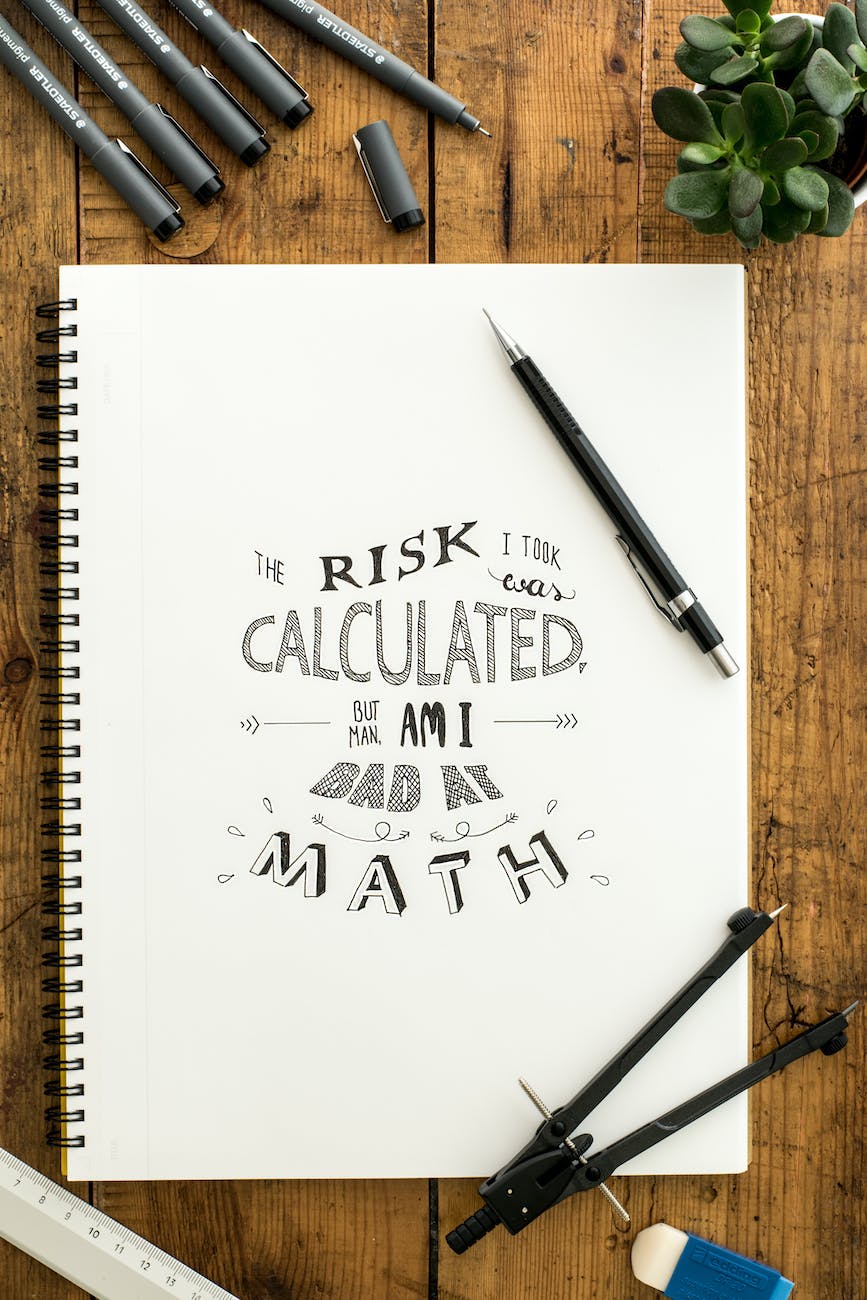
When we hear the word «risk,» a sense of danger often comes to mind. However, this perception doesn’t hold true across the board. While some risks are undoubtedly negative, others have the potential to be embraced, precisely because they can add value and enhance customer service.
In today’s rapidly changing business landscape, organizations need to rethink their approach to risk and embrace opportunities for value creation. By understanding the intricate relationship between risk and opportunity, companies can unlock their potential for growth and success.
Here are some key considerations for rethinking risk and embracing opportunities for value creation:
- Setting a Clear Direction: It is essential for organizations to articulate a clear direction that outlines where the company is heading and how it will create growth and value. This direction should go beyond just focusing on lowering costs and error rates and emphasize the importance of value, impact, and meaning.
- Supporting Incentives for Value and Growth: Companies should provide support and incentives for workers to focus on value and growth. This includes investing in the necessary mindsets, tools, and capabilities that enable employees to embrace the value that humans can bring to work. By investing in the future of work, organizations can create an environment that fosters creativity and meaningful jobs.
- Solving Global Crises and Leveraging Technologies: Companies that will grow and create value are those that actively solve global crises, leverage exponential technologies, and adopt game-changing business models. By identifying and addressing unseen problems and opportunities, organizations can position themselves for success in the future.
- Embracing Risk: Embracing risk is crucial for creating value and growth. Companies should be selective about where they take risks and try new things, favoring incremental changes over radical ones. By embracing calculated risks, organizations can seize opportunities and drive innovation.
- Elevating Risk Management: Risk management should go beyond mere prevention and mitigation. It should be elevated to dynamic strategic enablement and value creation. This involves detecting potential new risks and weaknesses, determining risk appetite, and making informed decisions that facilitate effective business outcomes.
By rethinking risk and embracing opportunities for value creation, organizations can position themselves for success in an ever-changing business landscape. It requires a shift in mindset, a focus on innovation, and a willingness to embrace calculated risks. With the right approach, companies can unlock their potential and thrive in the future.
Why Traditional Risk Management Is No Longer Enough
In many organizations, risk management still operates as a defensive discipline. Its primary mission is to prevent losses, reduce exposure, and ensure compliance. While these objectives remain essential, they are no longer sufficient in a business environment defined by volatility, technological acceleration, and shifting customer expectations.
Traditional risk management frameworks were designed for a world where change was linear, competitors were predictable, and disruptions were rare. Today, however, companies face exponential technologies, globalized competition, and customers who expect instant value. In this context, risk is not merely something to mitigate—it is something to reinterpret.
The companies that outperform their industries are not those that avoid risk, but those that reframe risk as a strategic resource. They treat uncertainty as raw material for innovation, differentiation, and growth. This shift requires a new mindset: risk becomes a lens through which opportunities are discovered, not a barrier that prevents action.
Consider how digital-native companies operate. They launch products before they are perfect, iterate in real time, and rely on customer feedback to refine their offerings. Their tolerance for uncertainty is not a flaw—it is a competitive advantage. They understand that speed, experimentation, and adaptability matter more than perfection.
This does not mean embracing reckless behavior. Instead, it means developing the capability to absorb uncertainty, learn quickly, and scale what works. Companies that master this approach build resilience not by avoiding risk, but by engaging with it intelligently.
The implication is clear: organizations must evolve from risk prevention to risk-enabled value creation. This requires new tools, new leadership behaviors, and new cultural norms. It also requires a deeper understanding of how risk interacts with strategy, innovation, and customer value.
About a decade ago, back in 2012, Robert S. Kaplan and Anette Mikes authored a thought-provoking piece in the Harvard Business Review titled «Managing Risks: A New Framework«,
Kaplan & Mikes identify three types of risks: preventable risks, strategy risks, and external risks. Preventable risks arise from within the organization and can be controlled through rules and compliance. Strategy risks are taken intentionally to generate value and require active management. External risks come from outside the organization and cannot be controlled, only mitigated. Understanding these categories helps leaders decide how to respond to uncertainty and where to invest resources.
Type 1: External Risk
Definition: Risks stemming from external factors beyond an organization’s control.
Examples: Climate change, economic downturns, pandemics.
Mitigation: Strategies to minimize the impact if the risk eventuates.
Tools: Scenario planning, war gaming, stress testing.
Type 2: Preventable Risk
Definition: Risks originating from internal processes and actions within an organization.
Examples: Accidents, errors, fraudulent activities.
Mitigation: Measures to eliminate or curtail the likelihood of occurrence.
Tools: Standard operating procedures, audits, adherence to norms and values.
Type 3: Strategic Risk
Definition: Risks undertaken with the aim of achieving superior strategic outcomes.
Examples: Credit risk management, investments in research and development, location-based risks.
Mitigation: Strategies to cost-effectively reduce the probability and impact.
Tools: Risk mapping, key risk indicators, allocation of resources based on risk assessment.

| Risk Type | Description | Control Level |
|---|---|---|
| Preventable | Internal, caused by processes or people | High |
| Strategy | Taken intentionally to create value | Medium |
| External | Outside the organization | Low |
The Psychology of Risk: How Humans Misjudge Opportunity
Risk is not only a technical concept—it is a psychological one. Human beings are wired to avoid uncertainty, even when doing so limits their potential. Behavioral economics shows that people consistently overestimate the probability of negative outcomes and underestimate the potential upside of bold decisions.
This cognitive bias affects organizations in subtle but powerful ways. Teams may reject innovative ideas because they seem too risky. Leaders may delay strategic moves because the downside feels more tangible than the upside. Customers may resist new solutions because they fear change more than they value improvement.
Understanding the psychology of risk is essential for designing strategies that unlock opportunity. Leaders must recognize that fear of loss is stronger than desire for gain. They must create environments where experimentation is safe, failure is acceptable, and learning is rewarded.
Companies that excel at innovation often cultivate cultures where risk-taking is normalized. They celebrate small bets, encourage curiosity, and reduce the stigma associated with failure. This cultural shift transforms risk from a threat into a catalyst for progress.
In a nutshell, the three categories advocate preparing for external risks, preventing avoidable risks, and carefully managing strategic risks.
Of these three classifications, Strategic Risk stands out as the most intriguing. Unlike the other types, strategic risks possess the potential to significantly enhance a company’s value and become an integral aspect of its overarching strategy. This prompts a compelling question: Can assuming GREATER risk enhance the performance of our organization?
Strategic Risk as a Driver of Innovation
Strategic risk is the most misunderstood category of risk. Unlike external or preventable risks, strategic risks are intentionally taken to achieve superior outcomes. They are the risks that fuel innovation, differentiation, and long-term growth.
Companies that embrace strategic risk:
- Enter new markets
- Launch disruptive products
- Experiment with new business models
- Invest in emerging technologies
- Challenge industry norms
These actions carry uncertainty, but they also create the conditions for breakthrough performance.
Strategic risk requires disciplined experimentation. Organizations must design portfolios of initiatives, test hypotheses, measure outcomes, and scale successes. This approach transforms risk-taking from a gamble into a structured process for innovation.
While this notion may appear counterintuitive from a risk management standpoint, it’s a concept that’s more prevalent than we might initially assume. Transferring risk from customers, in fact, is a common approach to adding value. Consider the following examples:
- Various insurance policies
- Payment structures, notably no-cure-no-pay arrangements
- Leasing and rental models
- The «X as a service» paradigm
How AI Changes the Risk Landscape
Artificial Intelligence is redefining how organizations perceive, manage, and leverage risk. AI does not simply automate tasks—it transforms decision-making, prediction, and strategic planning.
AI enhances risk management in three fundamental ways:
- Prediction Machine learning models can detect patterns that humans cannot see, enabling earlier identification of emerging risks.
- Prevention AI-powered monitoring systems can detect anomalies in real time, reducing preventable risks such as fraud, operational errors, or compliance breaches.
- Opportunity discovery AI can analyze vast datasets to uncover hidden opportunities, new customer segments, or emerging market trends.
But AI also introduces new risks: algorithmic bias, cybersecurity vulnerabilities, and overreliance on automated decision-making. Companies must balance the benefits of AI with robust governance frameworks that ensure transparency, fairness, and accountability.
The organizations that thrive will be those that integrate AI into their risk strategy—not as a tool for control, but as a partner for innovation.
To conclude, here’s a comprehensive approach to dealing with risks based on the aforementioned categories:
- Identify all risks confronting your organization.
- Categorize these risks into the three defined types.
- Develop strategies to mitigate the potential impact of external risks.
- Implement measures to reduce the likelihood of preventable risks.
- Explore and evaluate strategic risks that align with your objectives.
- Systematically manage the likelihood and consequences of strategic risks.
Building a Risk-Ready Culture
A company’s culture determines how it perceives and responds to risk. Risk-ready cultures share several characteristics:
- Psychological safety
- Transparent communication
- Cross-functional collaboration
- Learning orientation
- Customer-centric decision-making
Leaders play a critical role in shaping this culture. They must model curiosity, encourage experimentation, and reward learning. They must also create mechanisms that allow teams to take small, reversible risks that generate insight without jeopardizing the business.
A Practical Framework for Opportunity-Driven Risk
To operationalize opportunity-driven risk, organizations can adopt a simple framework:
- Identify uncertainty
- Assess upside and downside
- Design small experiments
- Measure learning
- Scale what works
- Retire what doesn’t
This framework transforms risk from a static concept into a dynamic engine for value creation.
Conclusion: The Future Belongs to the Bold
The companies that will lead the next decade are those that embrace uncertainty with intelligence, creativity, and discipline. Risk is no longer something to fear—it is something to harness.
Organizations that rethink risk as opportunity will innovate faster, serve customers better, and create more sustainable value. The future belongs to those who dare to experiment, learn, and evolve.
In conclusion, rethinking risk is not about avoiding uncertainty but about learning how to use it strategically. Organizations that embrace calculated risks, invest in innovation, and empower their people will be better positioned to create sustainable value. Risk is not the enemy—stagnation is.
Rethinking risk is not about avoiding uncertainty—it is about learning to use it strategically. Organizations that embrace calculated risks, invest in innovation, and empower their people will be better positioned to create sustainable value. Risk is not the enemy; stagnation is.
Recommended Reading:
- ESG 2026: los riesgos que definirán qué empresas seguirán siendo relevante
- Causality and Probability in Business Innovation
- Managing Risks: A New Framework
- To Understand Risk is to Understand the Opportunity to Create Value
- Redefining Work for New Value: The Next Opportunity
- The next leap in value creation: How Game Changers are defining the future of business
- A pragmatic pathway for redefining work
- How to embrace risk to create value
- Meeting the future: Dynamic risk management for uncertain times
Leave a comment