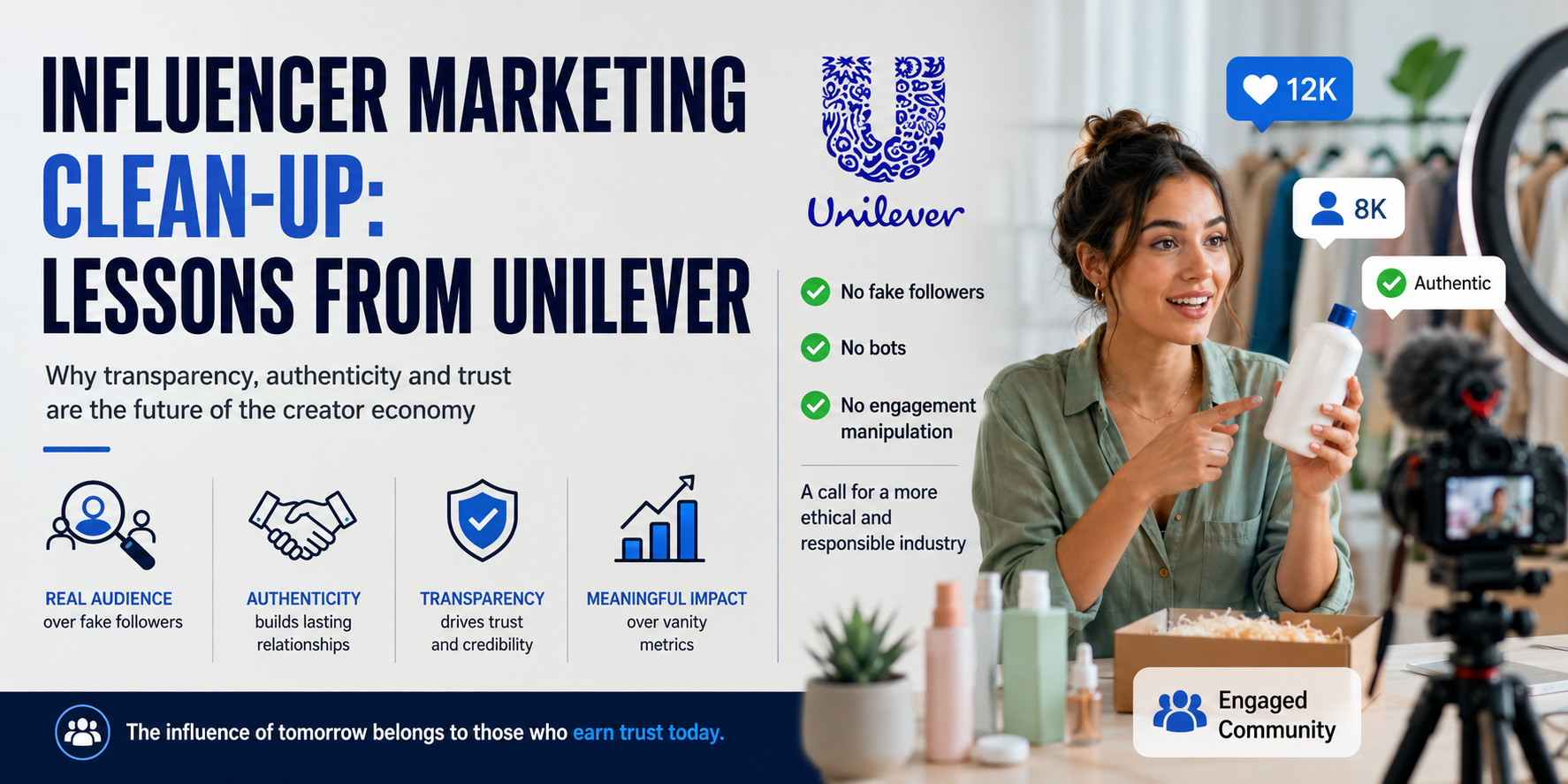
In June 2018, consumer goods giant Unilever sent a message that resonated throughout the marketing industry. During the Cannes Lions Festival, the company publicly announced that it would stop working with influencers who bought followers, used bots, or manipulated engagement metrics. The initiative, led by marketing executive Keith Weed, was not merely a public relations exercise. It was a warning that the influencer marketing ecosystem was facing a credibility crisis.
At the time, influencer marketing was experiencing explosive growth. Brands were investing billions of dollars in collaborations with content creators across Instagram, YouTube, Twitter, and emerging social platforms. However, behind the impressive engagement numbers lurked a growing problem: fake followers, automated bots, purchased likes, and artificially inflated audiences. Research cited by industry observers suggested that many mid-tier influencers had significant percentages of fake followers, creating a distorted picture of their real influence. (The Wall Street Journal)
Eight years later, Unilever’s warning appears more relevant than ever. The creator economy has grown exponentially, new platforms such as TikTok have transformed digital communication, artificial intelligence is reshaping content creation, and regulators around the world have increased scrutiny of influencer practices. Yet the central challenge remains the same: how can brands build authentic relationships with consumers in a world increasingly dominated by algorithms, automation, and manufactured popularity?
This article explores the lessons marketers, brands, entrepreneurs, and creators can learn from Unilever’s stance and why transparency has become one of the most valuable assets in modern marketing.
The Rise of Influencer Marketing
The concept of influence is not new. For decades, brands have used celebrities, athletes, experts, and public figures to promote products and services. What changed with social media was accessibility.
Platforms such as Instagram, YouTube, TikTok, LinkedIn, and Twitch created a new category of communicators: creators who built communities around specific interests, lifestyles, professions, or passions.
Unlike traditional celebrities, these influencers appeared relatable. They shared everyday experiences, personal stories, opinions, successes, and failures. Followers often felt a stronger connection to them than to conventional advertising.
This relationship transformed influencer marketing into one of the fastest-growing areas of digital marketing. According to industry studies, spending on influencer campaigns has increased dramatically over the last decade because audiences increasingly distrust traditional advertising and place greater value on peer recommendations. (The Times)
The success of influencer marketing rests on three pillars:
- Trust
- Authenticity
- Relevance
When these elements are present, recommendations feel natural rather than promotional.
However, as budgets grew, so did incentives for manipulation.
The Fake Follower Problem
One of the biggest challenges facing influencer marketing is the creation of false authority.
Buying followers became a thriving industry. For a relatively small investment, individuals could acquire thousands of followers, likes, comments, and views.
The result was predictable.
Brands began making decisions based on vanity metrics rather than genuine influence.
An account with 500,000 followers might have less real impact than a niche creator with 20,000 highly engaged followers.
Unilever identified this problem early. The company publicly stated that it would no longer work with influencers who artificially inflated their audiences and called on platforms and agencies to improve transparency. (campaignlive.co.uk)
The consequences of fake engagement are significant:
- Wasted marketing budgets
- Misleading performance reporting
- Reduced campaign effectiveness
- Loss of consumer trust
- Damage to brand reputation
Most importantly, fake metrics undermine the very foundation of influencer marketing: credibility.
If audiences discover that influence has been purchased rather than earned, trust disappears.
Why Trust Is the Real Currency
Marketing has always been about attention.
Modern marketing, however, is increasingly about trust.
Consumers are exposed to thousands of marketing messages every day. Most are ignored.
What cuts through the noise is credibility.
This explains why influencer marketing became so powerful. People trust people more than they trust corporations.
Yet that trust can vanish quickly.
When audiences discover hidden sponsorships, fake reviews, manipulated metrics, or misleading endorsements, they often react strongly.
Trust takes years to build and seconds to lose.
Unilever understood that protecting trust was not only an ethical issue but also a business issue.
A campaign built on false influence may generate impressions, but it rarely creates long-term brand equity.
Transparency as a Competitive Advantage
One of the most important lessons from the Unilever initiative is that transparency should not be viewed as a legal obligation.
It should be viewed as a competitive advantage.
Research consistently shows that consumers are willing to accept sponsored content when sponsorship is clearly disclosed. What they reject is deception. (arXiv)
Transparent influencers often enjoy stronger relationships with their audiences because followers appreciate honesty.
Brands that encourage transparency benefit as well:
- Higher credibility
- Better audience perception
- Reduced regulatory risk
- Stronger long-term engagement
- Increased customer loyalty
In many cases, a clearly disclosed partnership can perform better than a hidden one because authenticity remains intact.
The future belongs not to influencers who appear perfect but to creators who appear genuine.
The Evolution of Regulation
Since Unilever’s announcement, regulatory pressure has increased worldwide.
Authorities now require clearer disclosure of sponsored content, affiliate links, and paid partnerships.
In the United States, the Federal Trade Commission has strengthened enforcement efforts related to influencer marketing transparency. Similar measures have been adopted across Europe and other regions.
The direction is clear.
Influencer marketing is no longer a loosely regulated frontier.
It is becoming a mature advertising channel subject to increasing scrutiny.
Brands that continue to rely on ambiguous disclosures or questionable influencer practices face growing risks.
The Creator Economy and the Authenticity Paradox
Ironically, the growth of influencer marketing has created a paradox.
The more commercial the creator economy becomes, the harder it becomes to maintain authenticity.
Influencers now operate as media businesses.
They negotiate contracts.
They manage teams.
They create advertising campaigns.
They launch products.
They build personal brands.
As commercial opportunities increase, audiences become more skeptical.
Consumers constantly ask themselves:
- Is this recommendation genuine?
- Does the influencer actually use this product?
- Is this opinion authentic?
- Is this content sponsored?
The challenge for creators is maintaining credibility while monetizing their influence.
The challenge for brands is selecting partners whose values genuinely align with their own.
Micro-Influencers vs Mega-Influencers
One interesting consequence of the transparency movement is the growing importance of micro-influencers.
While celebrity influencers offer massive reach, smaller creators often generate stronger engagement and greater trust.
Micro-influencers typically have:
- More focused audiences
- Higher engagement rates
- Stronger community relationships
- Greater perceived authenticity
- Lower campaign costs
Many brands have discovered that working with dozens of niche creators can outperform a single celebrity endorsement.
This trend aligns with Unilever’s broader vision of meaningful influence rather than superficial reach.
The future of influencer marketing may belong less to the biggest voices and more to the most trusted voices.
Artificial Intelligence Changes the Game Again
The rise of generative AI introduces a new layer of complexity.
Today, brands face questions that barely existed in 2018:
- Should AI-generated influencers be disclosed?
- Can virtual influencers build genuine trust?
- How should synthetic content be labeled?
- How can consumers distinguish real experiences from generated narratives?
The emergence of virtual influencers and AI-created content raises concerns similar to those that motivated Unilever’s original campaign.
The central issue remains authenticity.
Consumers want to know who is speaking, why they are speaking, and whether they can trust the message.
As AI-generated content becomes increasingly realistic, transparency becomes even more important.
Measuring Influence Correctly
One reason influencer fraud became widespread is that marketers often relied on the wrong metrics.
Follower counts are easy to measure but often misleading.
More meaningful indicators include:
- Engagement quality
- Audience relevance
- Conversion rates
- Brand sentiment
- Customer acquisition costs
- Retention impact
- Lifetime customer value
The smartest brands increasingly evaluate creators using business outcomes rather than social media vanity metrics.
The question is no longer:
“How many followers does this person have?”
The question is:
“How much trust and action does this person generate?”
What Brands Should Do Today
Organizations that want to build effective influencer strategies should adopt several principles.
Prioritize Values Alignment
Choose creators who genuinely fit the brand.
Authenticity cannot be manufactured.
Verify Audience Quality
Use analytics tools to identify suspicious engagement patterns.
Look beyond follower counts.
Focus on Long-Term Relationships
Repeated collaborations often appear more credible than one-off sponsored posts.
Encourage Honest Reviews
Allow creators to express real opinions rather than scripted messages.
Measure Business Impact
Track conversions, retention, sentiment, and customer value.
Demand Transparency
Require clear disclosure of sponsorships and partnerships.
Transparency protects both the creator and the brand.
What Influencers Should Learn
The message for creators is equally important.
Long-term success depends on trust.
Shortcuts may deliver temporary growth, but they often damage credibility.
Influencers who want sustainable careers should:
- Avoid buying followers
- Reject engagement manipulation
- Disclose partnerships clearly
- Promote products they genuinely believe in
- Focus on community rather than vanity metrics
- Build expertise within a niche
The creators who thrive over the next decade will not necessarily be those with the largest audiences.
They will be those with the strongest relationships.
Lessons for B2B Marketing
Although influencer marketing is often associated with consumer brands, the same principles apply to B2B environments.
LinkedIn creators, industry experts, consultants, researchers, and executives increasingly influence purchasing decisions.
In B2B markets, trust may be even more important because decisions involve larger investments and greater risk.
Organizations should therefore apply the same standards:
- Verify expertise
- Validate audience quality
- Prioritize authenticity
- Ensure disclosure
- Measure outcomes rather than impressions
The distinction between B2C and B2B influence is becoming increasingly blurred.
The Future of Influence
When Unilever challenged the influencer industry in 2018, many viewed the move as a reaction to a temporary problem.
History has shown otherwise.
The issues raised then continue to shape marketing today.
Fake followers have evolved.
Bots have become more sophisticated.
AI-generated content is emerging.
Regulators are becoming more active.
Consumers are becoming more skeptical.
Yet the core principle remains unchanged.
Influence is not measured by visibility alone.
True influence is measured by trust.
Brands that understand this reality will build stronger communities, better customer relationships, and more sustainable growth.
Creators who embrace transparency will build lasting careers.
Platforms that prioritize authenticity will retain user confidence.
And marketers who focus on meaningful influence rather than superficial popularity will achieve better business outcomes.
Conclusion
Unilever’s call to clean up influencer marketing was far more than a campaign against fake followers. It was an early recognition that the future of marketing would be determined by trust, transparency, and authenticity.
Today, those principles are even more relevant.
The creator economy continues to expand. Artificial intelligence continues to transform content creation. Consumers continue to demand greater honesty from brands and creators alike.
In this environment, transparency is no longer optional.
It is a strategic necessity.
The brands that succeed will not be those that buy the most attention.
They will be those that earn the most trust.
And that may be the most important marketing lesson of all. (The Wall Street Journal)
Deja una respuesta